Working Hours
Monday to Friday: 09:00 AM – 06:00 PM Saturday–Sunday: ClosedContact Information
Republic of Armenia, Yerevan, 0025, 15 Charents Street Email:info@iae.am Phone:+37410-55-26-45Find us on Facebook
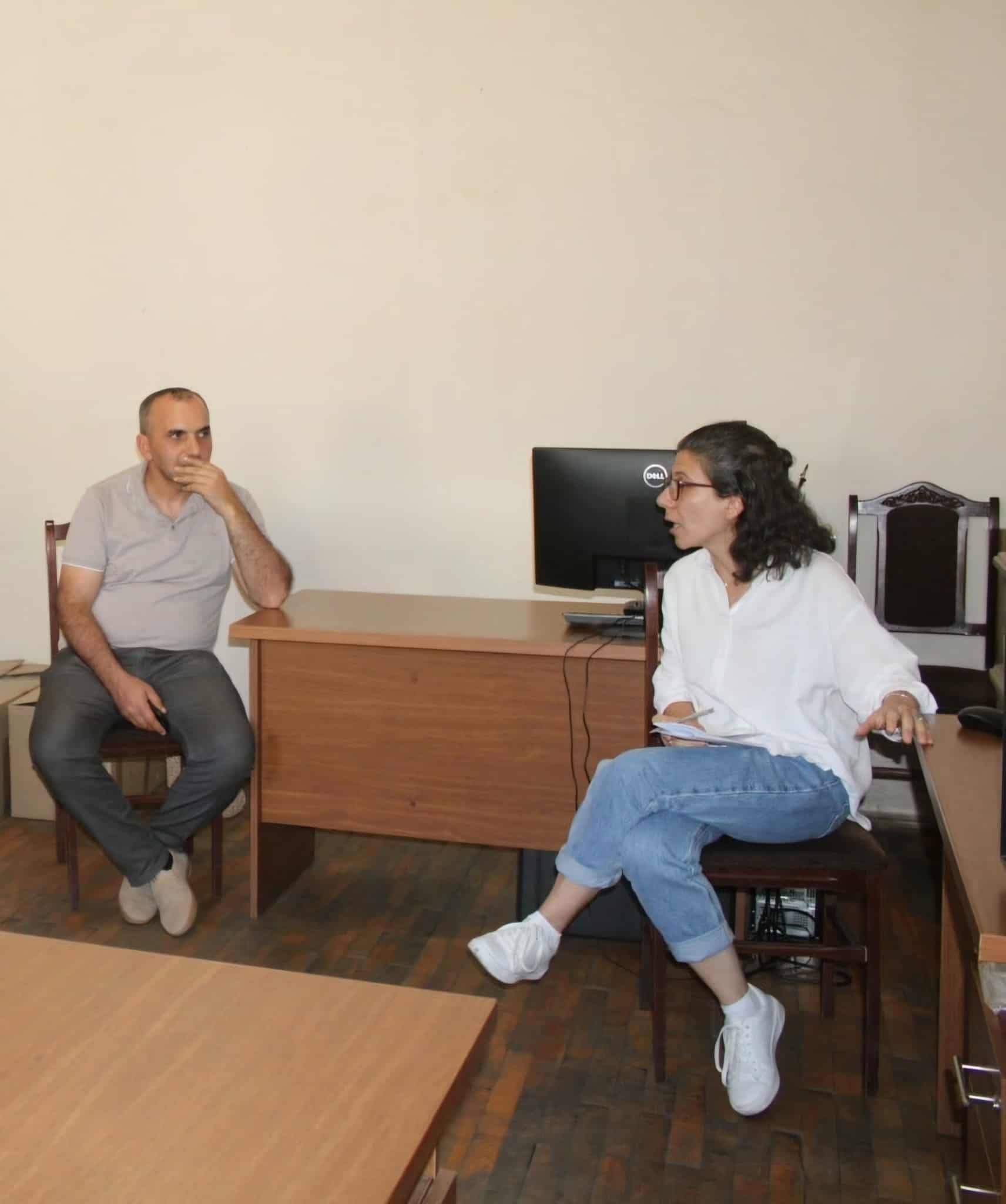
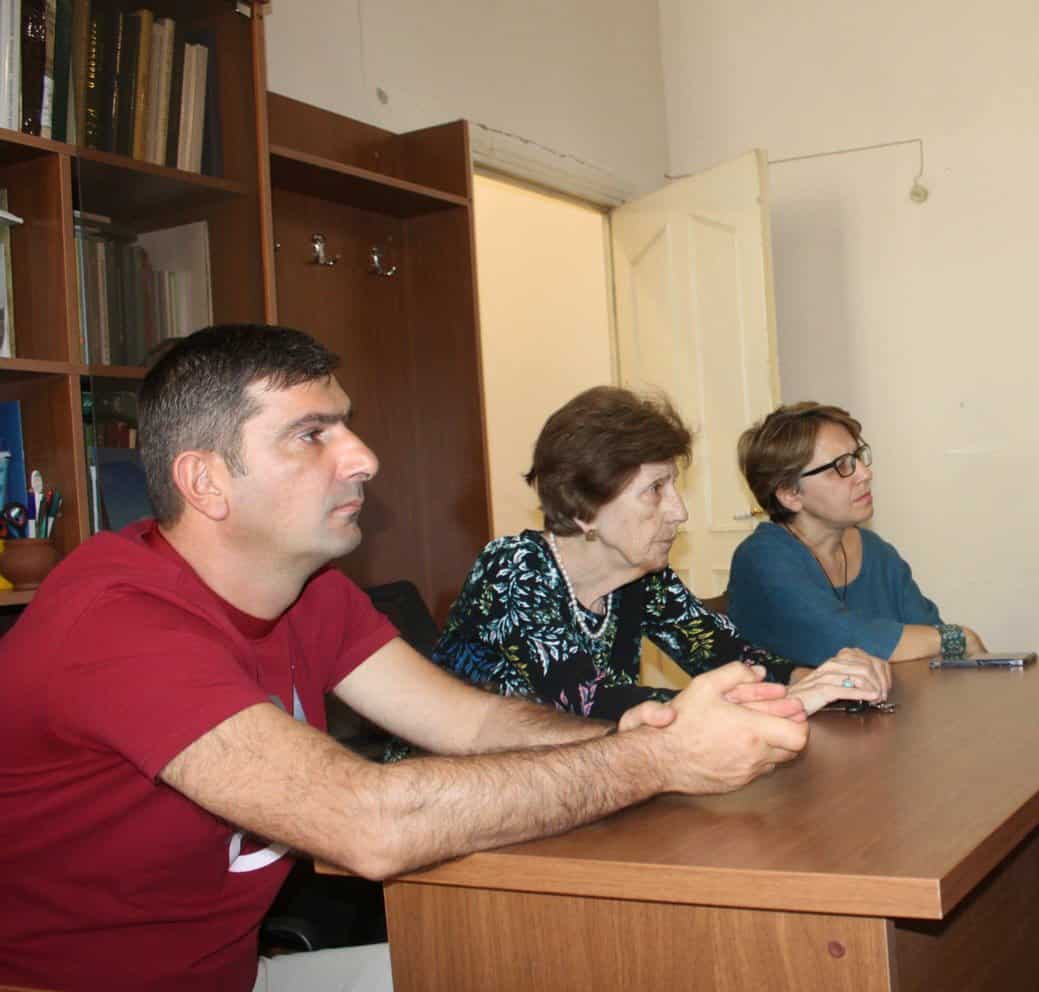
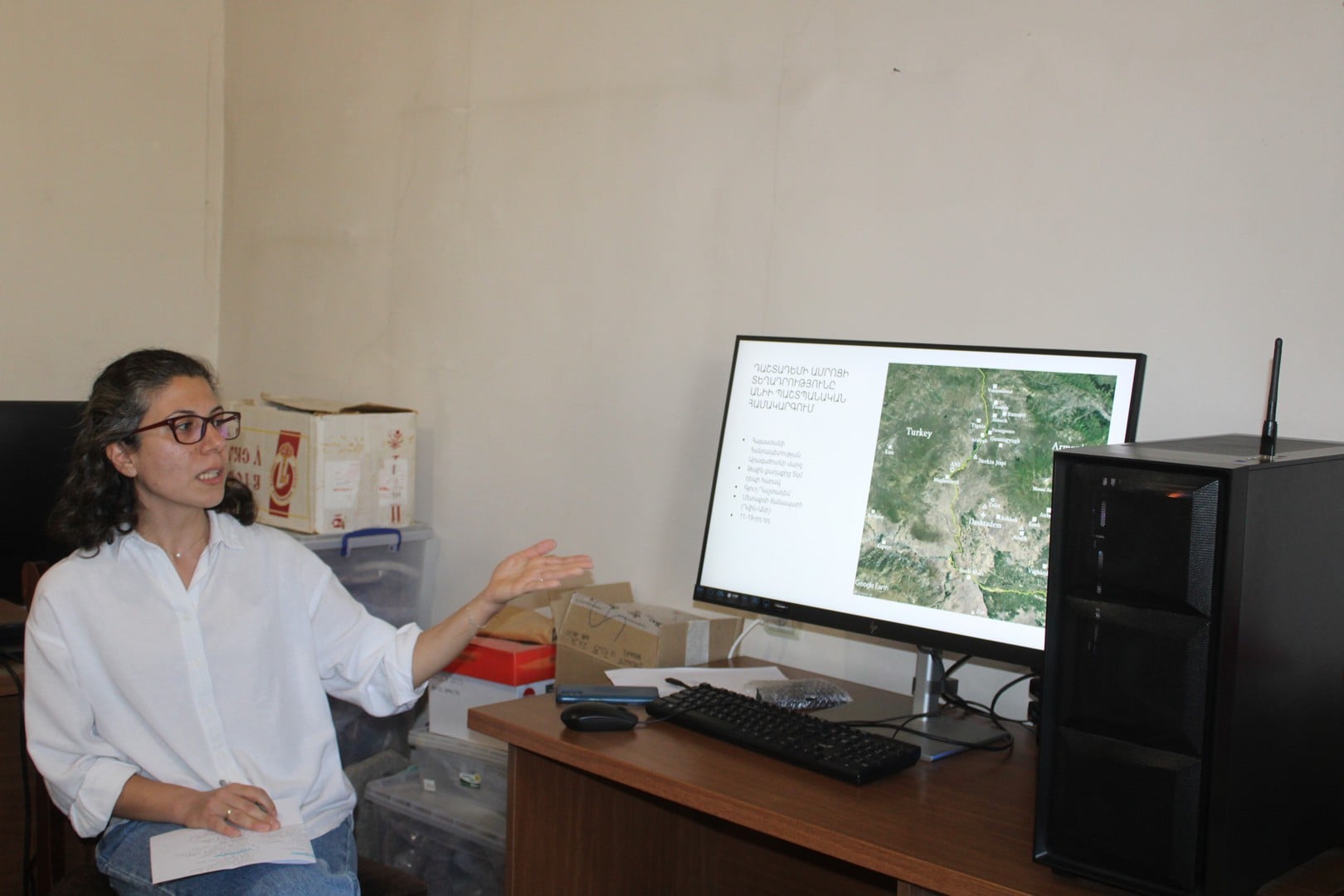
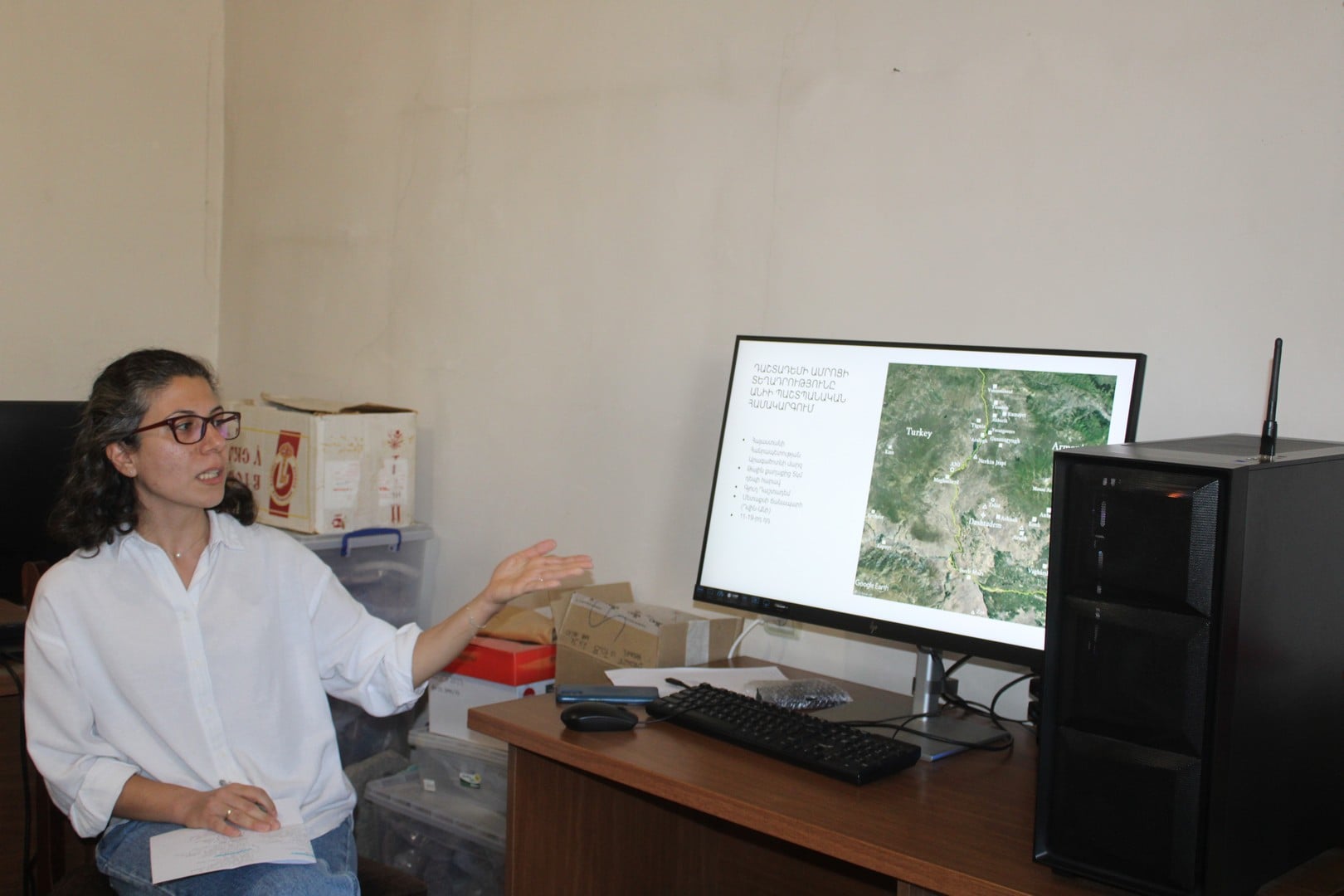
Lecture: “Problems of Restoration and Museification of Dashtadem Fortress.”
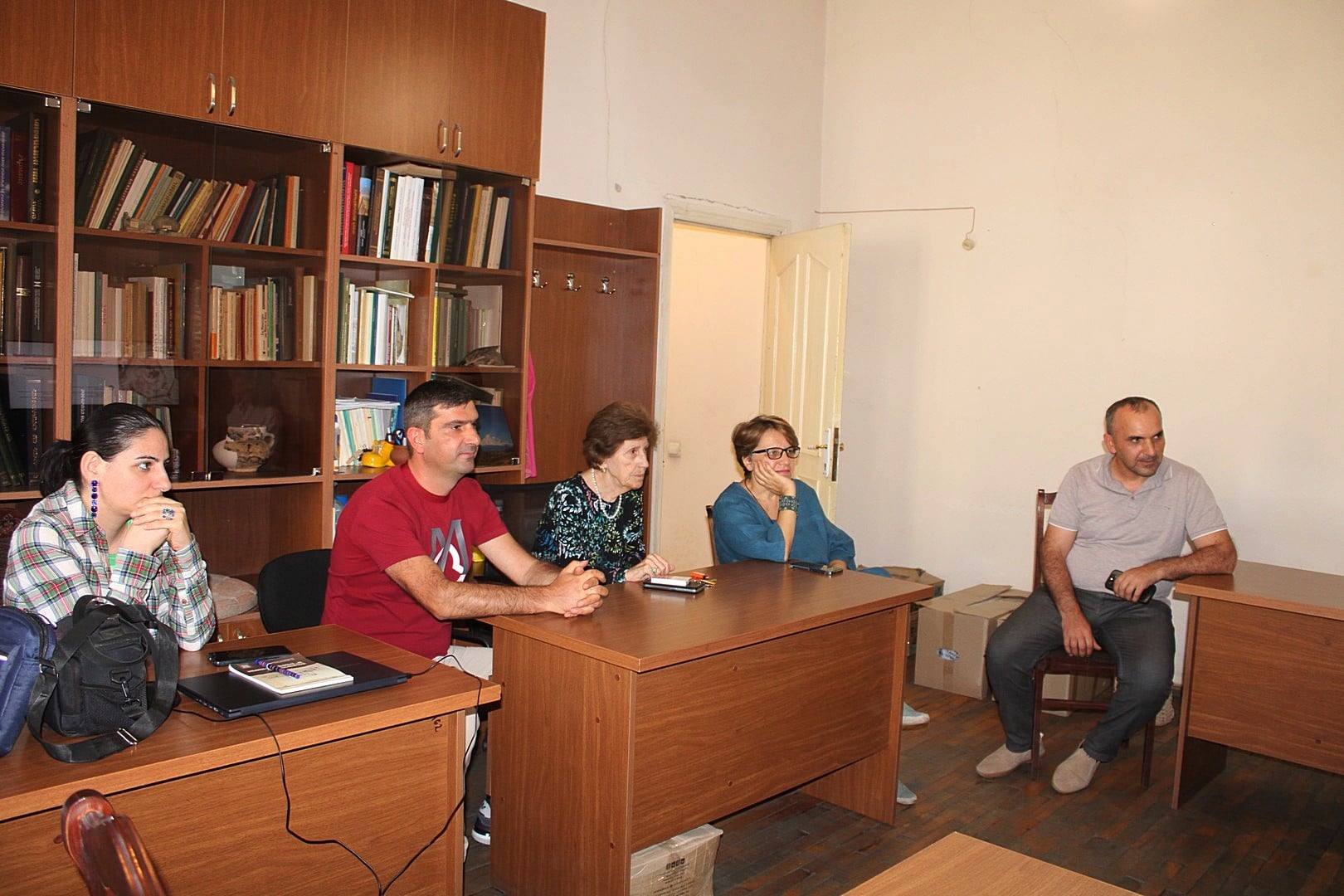
On 17 September 2025, the Research Group on Architectural Modeling of the Institute of Archaeology and Ethnography of the NAS RA organized a seminar. Archaeologist Sose Aghayan presented on the topic “Problems of Restoration and Museification of Dashtadem Fortress.” The event was attended both by members of the research group and by all those interested in the subject.
Dashtadem Fortress, also known as Kagheni Berd, is located in the Aragatsotn Province, near the town of Talin, in the village of Dashtadem. The speaker discussed the architectural and structural challenges of the fortress, emphasizing that they stem from both historical events and human and natural factors. Settlement of the fortress territory after the Armenian Genocide, interventions undertaken over the subsequent centuries, and natural disasters—most notably the 1988 Spitak earthquake—caused significant damage to the medieval structures. The situation is further complicated by the fact that previous excavations were not completed, and new restoration works often did not align with earlier interventions. The first excavations at Dashtadem Fortress were carried out in 1989–1990, and in the 2000s, they were continued as part of restoration programs. Since 2015, an expedition team from the Institute of Archaeology and Ethnography has been conducting systematic excavations at the fortress, simultaneously clearing the complex of extraneous constructions. The first attempts at restoring the fortress date back to 1961, when a collapsed section of the fortress wall was reinforced.
Sose Aghayan particularly emphasized that the fortress contains layers from the 12th to the 20th centuries, which complicates both the excavation process and its interpretation. She also noted the uncertainty regarding the sequence of construction, which is difficult to determine without comprehensive excavations. The speaker addressed not only archaeological but also conceptual and museological issues, stressing the need to balance the medieval reality with museum presentation, the importance of integrating modern museum practices, and the organization of interactive activities. She also highlighted public and social aspects, noting that the implementation of programs for the preservation and museification of the fortress requires adequate financial resources.
At the conclusion of the seminar, a discussion took place in which participants asked questions and provided suggestions to the speaker.
