Events
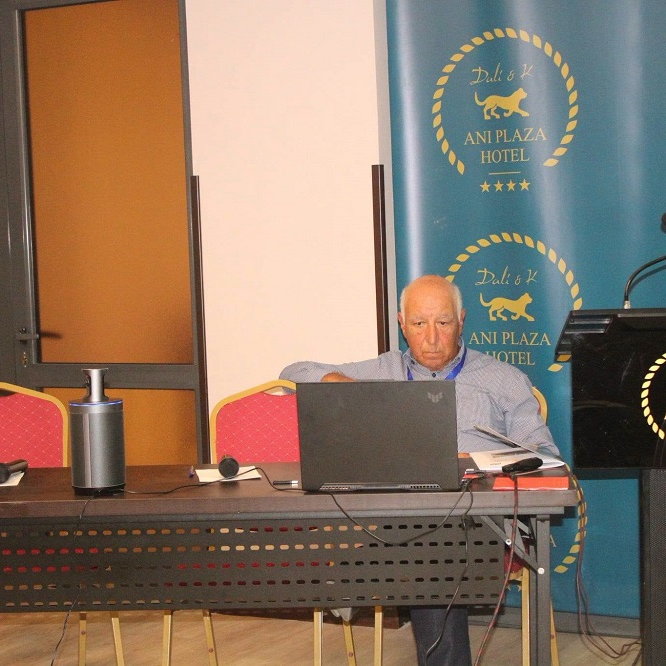
The three-day international obsidian conference IOC-2026, titled “From Magma to Artifact: The Geology and Archaeology of Obsidian,” has commenced.
On September 28, the three-day international obsidian conference IOC-2026, entitled “From Magma to Artefact: The Geology and Archaeology of Obsidian,” commenced in Yerevan. It was organized in Armenia jointly with the international IOC Scientific Committee by the Institute of Geological Sciences and the Institute of Archaeology and Ethnography. On the first day, the scholars who had arrived in Yerevan from different countries were welcomed by Arsen Bobokhyan, Director of the Institute of Archaeology and Ethnography, and Khachatur Meliksetyan, Director of the Institute of Geological Sciences. Before the beginning of the first session, the participants visited the Geological Museum of the Institute of Geological Sciences. The first session was chaired by Ruben Badalyan, archaeologist and researcher at the Institute of Archaeology and Ethnography, who also presented a paper entitled “The Use of Obsidian in the South Caucasus (Armenia): History and Results of Provenance Studies.” Khachatur Meliksetyan presented a paper entitled “The Geochemical Composition of Obsidian in the Armenian Highland.” Researchers from abroad also delivered presentations dedicated to Voskeblur, a Kura-Araxes culture settlement located within the administrative territory of the village of Hayanist, Ararat Province, Republic of Armenia. During the two days of the conference, approximately 40 archaeologists and geologists from different countries—including Hungary, the United States, Armenia, the Russian Federation, Cyprus, Georgia, Australia, Japan, France, and others—presented their research. On the third day of the conference, excursions are planned to various locations in the Republic of Armenia where obsidian sources are present.
2026-10-01
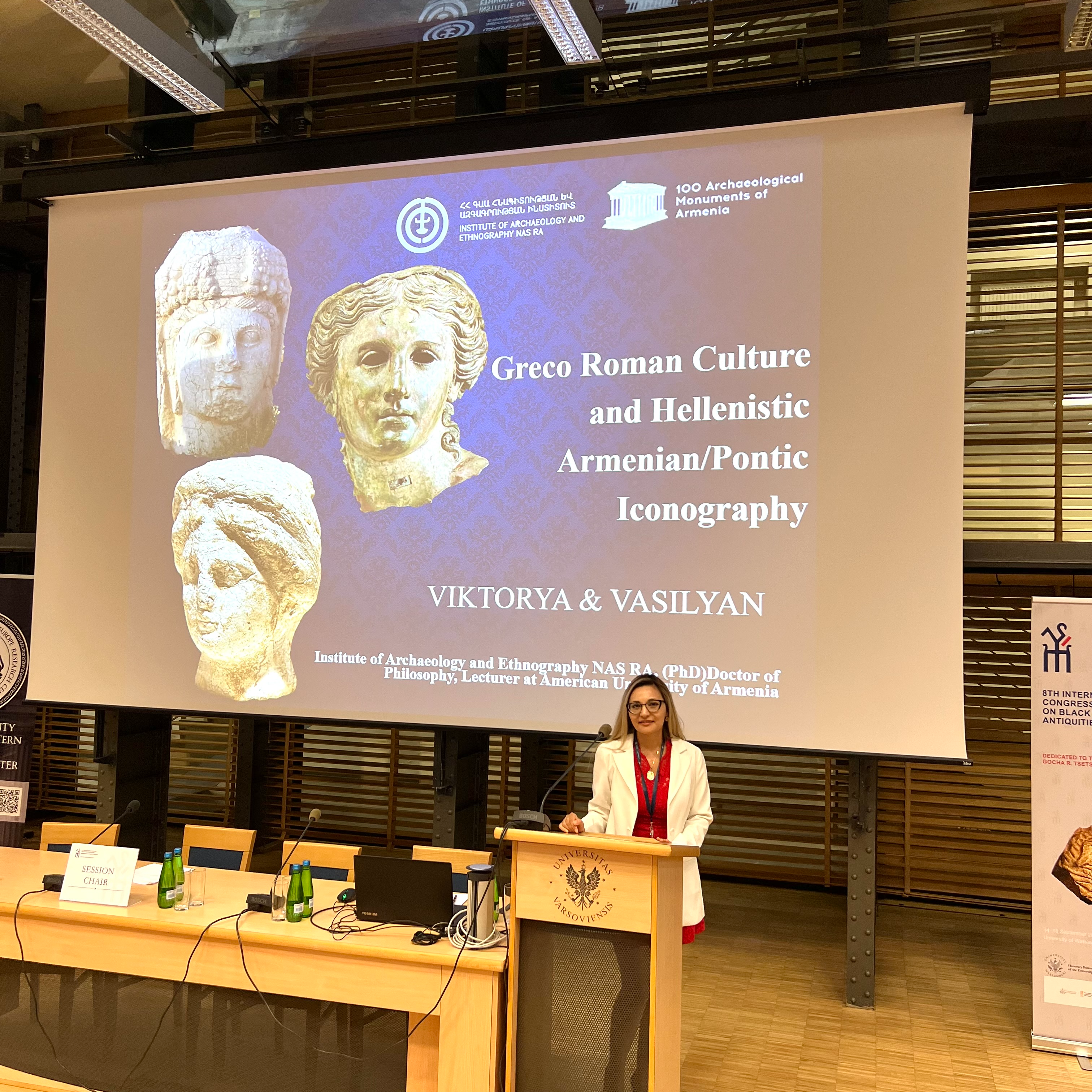
Victoria Vasilian Participated in the 8th International Congress of Black Sea Antiquities
From September 14 to 18, 2026, the University of Warsaw hosted the 8th International Congress on Black Sea Antiquities, one of the most important international scholarly events dedicated to the archaeology and history of the Black Sea region. This year’s congress was dedicated to the memory of the distinguished scholar and one of the initiators of this congress series, Gocha R. Tsetskhladze. The congress brought together more than 100 researchers from over 20 leading academic institutions in Europe and other parts of the world. The sessions focused on the theme “Common Trends and Local Traditions in the Black Sea Region (7th century BC – 5th/6th centuries AD).” Victorya Vasilyan, Senior Researcher at the Institute of Archaeology and Ethnography, PhD, participated in the congress with a presentation entitled “The Influence of Greco-Roman Culture on Armenian-Pontic Iconography.” The event also included a number of museum excursions and the participation of researchers from newly involved countries. Further details can be found at the link below.
2026-09-22
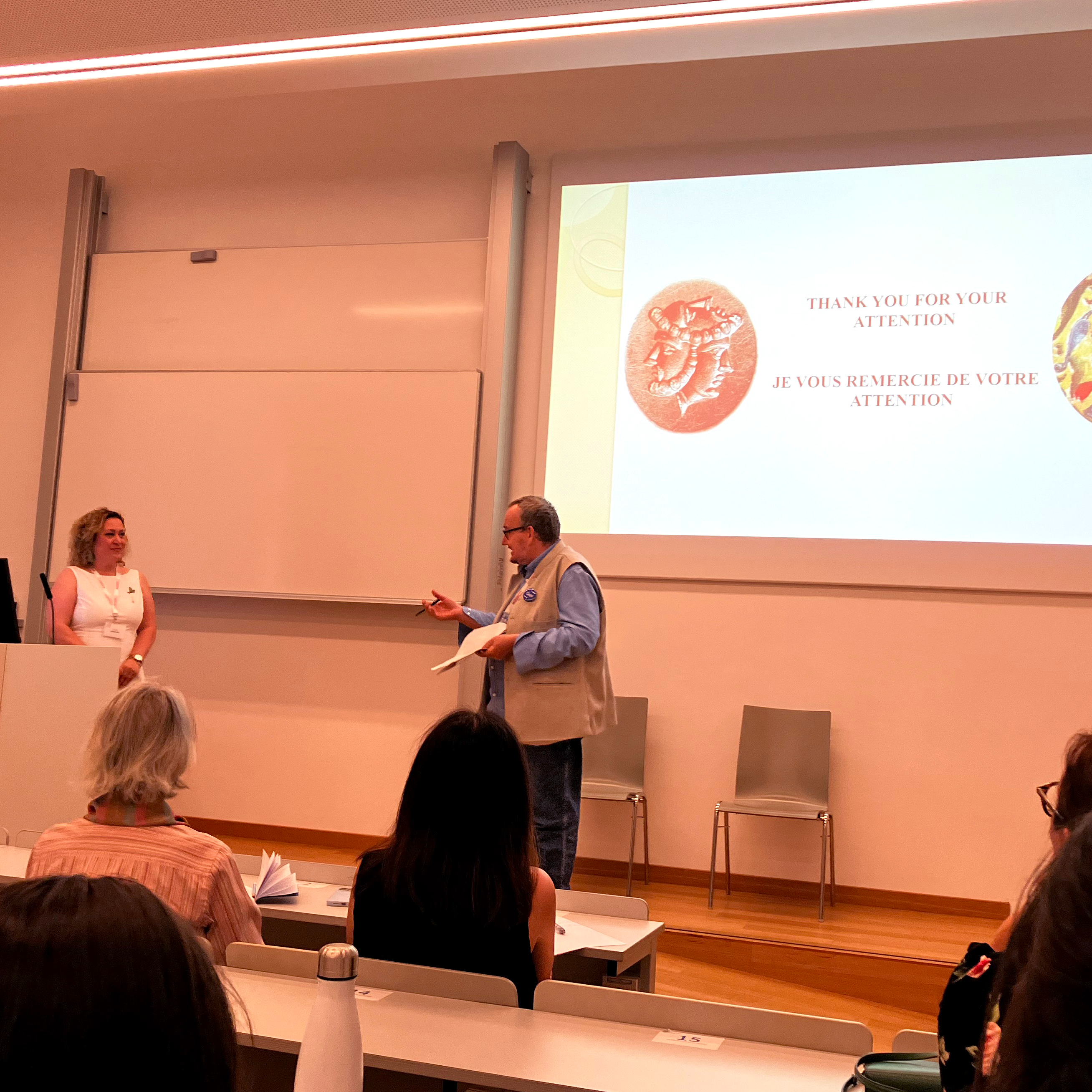
Within the framework of the 25th International Congress of Byzantine Studies, held at the University of Vienna, Armine Gabrielyan delivered a presentation.
The 25th International Congress of Byzantine Studies, entitled “Byzantium beyond Byzantium,” is being held at the University of Vienna from August 24 to 29. One of the largest international scholarly conferences in the field of Byzantine studies, the Congress is bringing together approximately 1,500 scholars from around the world this year. The participation of scholars from Armenia, as well as international specialists working in the field of Armenian studies, is particularly notable. On August 25, Armine Gabrielyan, Senior Researcher at the Institute of Archaeology and Ethnography of the National Academy of Sciences of the Republic of Armenia, presented a paper entitled “Echoes of Classical Antiquity: The Reminiscences of the Carved Gems in the Iconographic Program of Cilician Armenian Miniatures.” The paper explored the possible connections between the iconography of ancient engraved gems and Cilician Armenian manuscript illumination. Based on structural and compositional correspondences between a number of iconographic motifs, the paper examined the mechanisms through which ancient iconographic traditions may have been transmitted, as well as the possibility that, in certain cases, engraved gems may have served as direct iconographic models for medieval Armenian illuminators. The paper was presented in a session chaired by Johannes Preiser-Kapeller, a renowned specialist in Byzantine history. Armine Gabrielyan’s participation in the Congress was made possible through the financial support of the H. Hovnanian Family Foundation Armenia.
2026-08-29
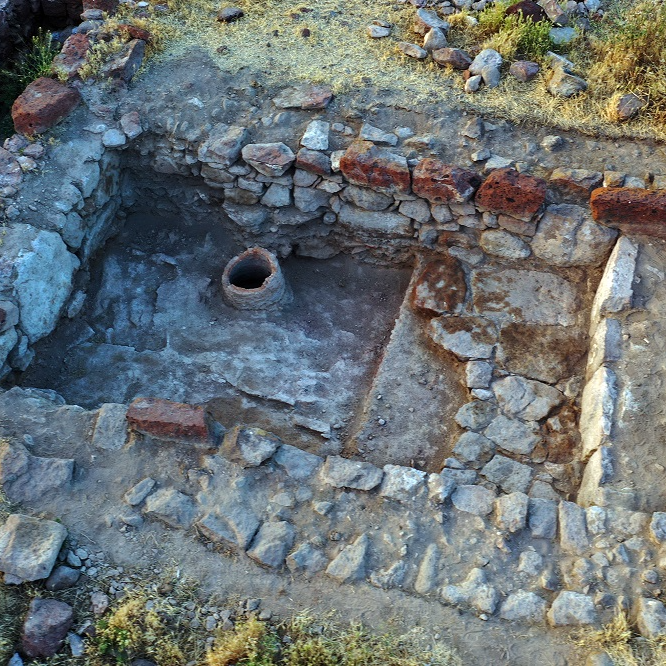
The 2026 Archaeological Excavation Season at Shamiram Has Successfully Concluded
The 2026 Archaeological Campaign at Shamiram Has Been Successfully Completed The 2026 archaeological campaign of the Joint Armenian-Italian Archaeological Mission at Shamiram, in the Aragatsotn region of the Republic of Armenia, has been successfully completed. The mission is carried out within the framework of the long-standing scientific collaboration between the Institute of Archaeology and Ethnography of the National Academy of Sciences of the Republic of Armenia and ISMEO – The International Association for Mediterranean and Oriental Studies. The project is directed by Varduhy Melikyan on the Armenian side and Roberto Dan on the Italian side. The 2026 campaign, conducted from 26 May to 25 June, focused on several key areas of the site, with the aim of clarifying the chronology, function and development of one of the most complex archaeological landscapes in central Armenia. Shamiram is an exceptional multi-period site, characterized by a large fortified rocky plateau, several monumental defensive lines, extensive settlement areas, and important funerary zones. The new investigations have confirmed the extraordinary depth of its occupation, from the Late Bronze Age and the Iron Age to the Urartian, post-Urartian, Hellenistic, Late Antique, medieval and post-medieval periods. Among the most significant results of the 2026 season is the continued excavation of Tomb 3, a monumental Late Bronze Age burial with concentric stone circles, a central stone cist, rich funerary offerings, bronze weapons, obsidian and metal arrowheads, and the remains of a ritually sacrificed horse. This discovery provides new and important evidence for the study of local elites, funerary practices and the symbolic role of the horse in the Late Bronze Age communities of Armenia. The excavations also revealed important evidence for the pre-Urartian phases of the site. In the area behind one of the towers of the Urartian fortification, a Middle Iron Age room with substantial destruction layers was discovered, followed by a burial that predates the construction of the Urartian defensive circuit. This sequence offers a rare opportunity to investigate the transformation of a local Iron Age centre before and during the expansion of the Urartian kingdom in the Ararat region. Further investigations were carried out in the fortified sectors of the site. The study of the gateway system of Wall 2 has shown that the visible L-shaped access was probably reorganized during the Hellenistic period over earlier Iron Age levels. At the same time, the excavation and cleaning of Tower 3 confirmed the monumental character of the Urartian fortification system, with a well-preserved megalithic structure measuring approximately 8.5 × 8.5 m. The 2026 campaign also opened new perspectives on the long life of Shamiram after the Urartian period. In Area 7, rooms with column bases, architectural structures built against the Urartian towers, and well-preserved medieval installations show how the ancient fortifications continued to shape the organization of the site for centuries. The results of this season confirm Shamiram as one of the key archaeological sites for understanding the long-term history of central Armenia: from Bronze Age funerary traditions and Iron Age local communities to Urartian monumental architecture and later phases of reuse and transformation. The mission expresses its gratitude to all the institutions and colleagues who supported the 2026 campaign. The project is co-financed by the Italian Ministry of Foreign Affairs and International Cooperation, with the support and in coordination with the Embassy of Italy in Yerevan. The study of the materials, together with anthropological, archaeozoological and further archaeological analyses, will continue in the coming months and will provide new insights into the history of Shamiram and its role in the ancient landscape of Armenia.
2026-07-07

A Presentation of the Book “The Fortresses of Syunik: 9th–14th Centuries” Was Held at the Institute of Archaeology and Ethnography.
n 24 June, the Library of the Institute of Archaeology and Ethnography of the National Academy of Sciences of the Republic of Armenia hosted the presentation of an important scholarly publication. In 2026, architect Ara Zarian's comprehensive and richly illustrated monograph, The Fortresses of Syunik: 9th–14th Centuries, comprising 86 printer's sheets, was published in an edition of 150 copies. The volume is devoted to the medieval fortresses of the historical province of Syunik in Greater Armenia. It was published upon the recommendation of the Academic Council of the Alexander Tamanyan National Museum-Institute of Architecture and issued by the AGBU Vahram Abtalian Cultural Foundation. The foreword was written by Professor Ashot Haykazun Grigoryan, Doctor of Architecture. The publication consists of a foreword, the author's preface, and six main chapters that provide a comprehensive examination of the medieval fortresses and fortified architectural heritage of Syunik. The presentation was attended by staff members from various departments of the Institute of Archaeology and Ethnography, as well as numerous invited guests. The audience was welcomed by the Institute's Director, Arsen Bobokhyan, Doctor of Historical Sciences. Emphasizing the scholarly and cultural significance of the monograph, he outlined the author's professional career and expressed his appreciation for Ara Zarian's many years of dedicated work. The author also addressed the audience, noting that his interest in the fortresses of Syunik dates back to his student years at the Yerevan Polytechnic Institute, inspired and encouraged by his late father, the architect Armen Zarian. T he presentation concluded with a question-and-answer session and an engaging discussion, during which participants had the opportunity to address both the contents of the volume and current issues in the study of Syunik's fortified architectural heritage.
2026-06-24
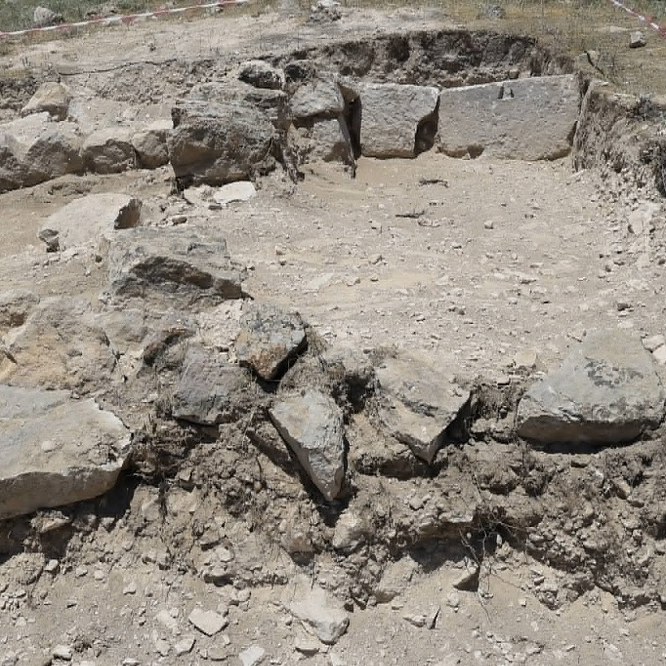
Excavations at a Newly Discovered Archaeological Site Near Vedi
Recently, archaeological investigations and excavations were carried out at a newly discovered archaeological site located near the town of Vedi in Armenia’s Ararat Province under the direction of Armine Gabrielyan, Senior Researcher at the Institute of Archaeology and Ethnography of the National Academy of Sciences of the Republic of Armenia, Ph.D. The site is situated between the villages of Dashtakar and Urtsadzor, approximately 3 km east of Vedi. On the final day of the excavations, we had the opportunity to visit the site and become acquainted with the work carried out there. According to Armine Gabrielyan, the first reconnaissance survey of the area was conducted in May 2022, accompanied by a resident of Vedi who informed the researchers about the presence of jar burials at the location. “Looters’ pits were already clearly visible on the two hills of the site, and they remain there to this day,” the archaeologist notes. The reconnaissance survey established that traces of architectural structures were present on both hills, while large quantities of painted pottery sherds dating to the Classical period were observed on the surface. As part of the short-term excavations conducted in May–June 2026, a 14 × 10 m trial trench was opened. The excavations revealed double-faced walls measuring 1.30–1.50 m in width, with a core filled with smaller stones. With only slight deviations from the cardinal directions, these walls are generally oriented along the north–south and east–west axes. Within the exposed structure, a stone-cist burial of a child dating to the same period was discovered and excavated. Among the noteworthy finds are several finely dressed stones bearing traces of dovetail joints. These, however, were found in secondary use and had been incorporated into the funerary structure. Armine Gabrielyan adds: “The 2026 excavations also have a rescue component to a certain extent. Our objective is to document and reveal the archaeological and cultural context of the site as comprehensively as possible, as it is being damaged on a daily basis by illegal excavations carried out by looters in the area.” The expedition's architect is Hayk Kyureghyan, and residents of the town of Vedi are also participating in the fieldwork. The research team plans to continue the excavations in the near future by expanding the boundaries of the excavation area and further advancing the investigation of this newly discovered archaeological site.
2026-06-15
