Events
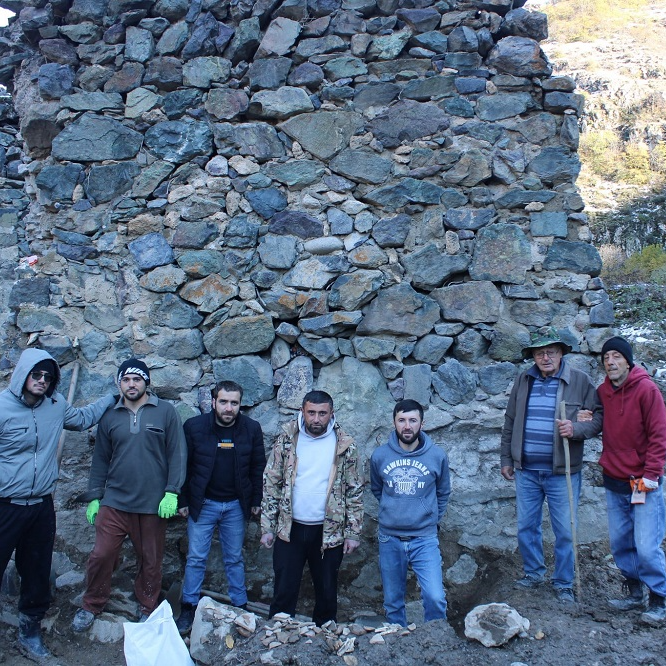
The IAE Expedition Continues Excavations at the Kapan Archaeological Site
Since mid-October 2026, the expedition of the Institute of Archaeology and Ethnography (IAE) has continued excavations at an archaeological site located south of Kapan, the administrative centre of the Syunik Province of the Republic of Armenia, in a forested area on the right bank of the Voghji River. The excavations were initially launched in 2024. This important work is being carried out at the initiative and with the financial support of the Syunik Regional Administration. The archaeological expedition is headed by archaeologist Gagik Sargsyan. It has already become clear that the site represents the ancient city of Kapan, which is mentioned in historical sources from the 5th century onwards. In the 10th century, under the Kingdom of Syunik (Kapan), founded in 987, the city became the political and cultural centre of the region and served as its capital. The excavations are being conducted primarily in the area of the royal citadel and palace complex. As is known, as early as 2025, the foundations of an Early Medieval three-aisled basilica were uncovered beneath the soil. An oil press was also discovered, with its stone component preserved. This year, a furnace constructed of finely dressed stone was unearthed at the edge of the site. According to the archaeologists' preliminary hypothesis, it was used to heat water for a bathhouse. In the archaeologists' view, bathhouses and other service structures were located in this part of the settlement. The archaeological site is entirely covered with trees. During the most recent excavations, a copper sceptre head, a symbol of princely authority, was recovered and has already been transferred to the Kapan Museum of Local Lore. Parts of a clasp from the binding of a parchment manuscript were also discovered. On November 10, beneath a layer of soil, two metal coins, a fragment of medieval glass, several iron nails dating to the same period, and fragments of ceramic vessels were found. Archaeologist G. Sargsyan reported that this year's fieldwork is expected to conclude in the coming days. Weather conditions are also now hindering the excavations. Not far from this historic city stands Bazaberd, one of the powerful fortresses of Syunik, situated on the left bank of the Voghji River. According to Stepanos Orbelian, the capital of Syunik was destroyed in 1126 as a result of Seljuk raids under the command of Amir Harun. Nevertheless, owing to the impregnable fortress of Baghaberd, the kingdom survived until 1170, remaining the last independent Armenian kingdom in Greater Armenia.
2026-11-16
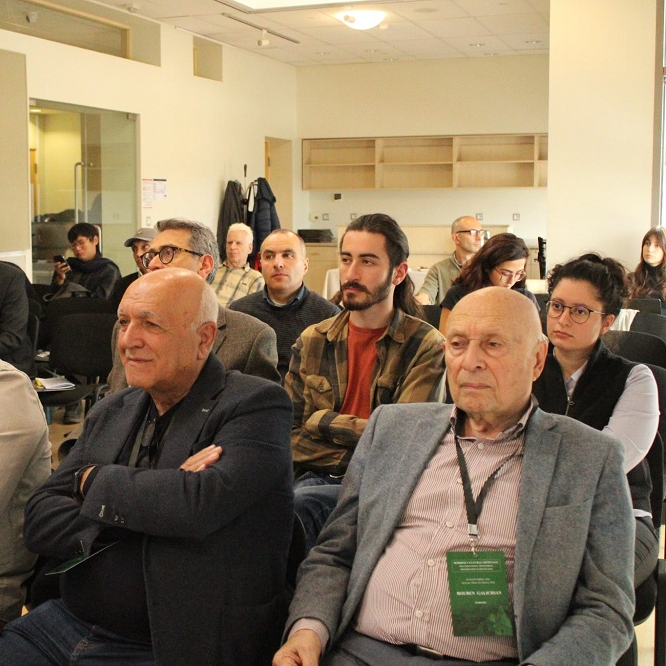
Th international conference entitled “Borderland Cultural Heritage: Documentation, Monitoring, Preservation, and Protection” opened at the American University of Armenia.
On October 29, the two-day international conference entitled “Borderland Cultural Heritage: Documentation, Monitoring, Preservation, and Protection” opened at the American University of Armenia. The conference was organized by the Institute of Archaeology and Ethnography of the National Academy of Sciences of the Republic of Armenia (NAS RA), the Armenian Studies Division of the Centre for the Study of the Christian East at the University of Salzburg, and the American University of Armenia. The event was supported by the Higher Education and Science Committee of the Ministry of Education, Science, Culture and Sports of the Republic of Armenia (Project No. 23RL-6A006) and the University of Salzburg. The first day of the conference featured three thematic sessions. The first session, entitled “Heritage Beyond Borders,” chaired by Haykuhi Muradyan (IACHS), opened with presentations by Austrian specialists Anna Kaiser, Manfred Mitlboeck, and Josef Eitler. The second session, “Archaeology and Borderland Regions,” chaired by Yasmin Dum-Tragut, featured presentations by Hamlet Petrosyan, Anush Safaryan, Hamazasp Abrahamyan, and Gayane Erkoyan. During the third session, “Documentation and Archaeology,” chaired by Anna Kaiser, Ruben Galichian, Hyle Kechichian, and Sipana Chakeryan from France (RePaZ Initiative) presented their research. Each presentation was followed by a question-and-answer session and professional discussion, providing an opportunity to explore various aspects of the research presented and exchange views on issues related to the preservation of cultural heritage. The conference proceedings will continue on October 30.
2026-10-28
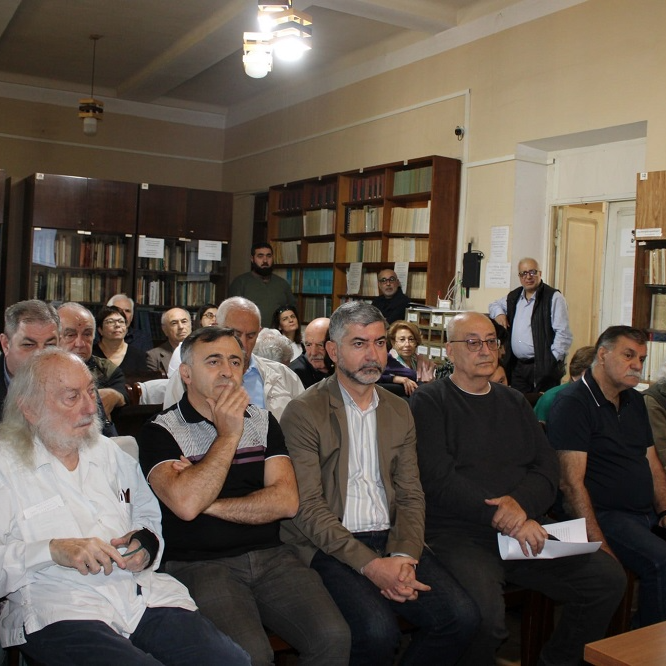
A republican conference dedicated to the 100th anniversary of the birth of Gevorg Tiratsyan, opened at the Institute of Archaeology and Ethnography
On October 22, a republican conference dedicated to the 100th anniversary of the birth of Gevorg Tiratsyan, a distinguished Armenian scholar and historian, opened at the Institute of Archaeology and Ethnography (IAE) under the title Urartu – Armenia (Issues of Statehood and Culture). The conference brought together prominent scholars in the field, including archaeologists, historians, philologists, and other specialists interested in the topic. Among those attending was the renowned French-Armenian historian Claude Mutafian. Before the conference began, Garegin Tumanyan, Doctor of Historical Sciences and chair of the first session, briefly outlined Gevorg Tiratsyan’s scholarly achievements and personal qualities. Welcome addresses were delivered by Pavel Avetisyan, Vice-President of the National Academy of Sciences of the Republic of Armenia (NAS RA); Levon Abrahamyan, Corresponding Member of NAS RA and Head of the Department of Cultural Anthropology at the IAE; and Armen Petrosyan, Doctor of Historical Sciences and IAE researcher. In their speeches, they highlighted Gevorg Tiratsyan’s significant contribution to the development of scholarship, emphasizing his role as an outstanding scholar, leader, and colleague. The first session was chaired by Garegin Tumanyan. Pavel Avetisyan, Doctor of Historical Sciences (IAE), presented a paper entitled "On the Characterization of Polycentric Political Systems: The Political Landscape of Etiuni Based on Archaeological Evidence". The paper "Armavir: Name, Myth, and History", presented by Armen Petrosyan, Doctor of Historical Sciences (IAE), examined the history of the ancient Armenian city of Armavir and the etymology of its name. Simon Hmayakyan, PhD in Historical Sciences and IAE researcher, presented the paper "An Episode in the Religious Policy of the Kingdom of Van (Based on Two Armavir Inscriptions)", co-authored with Nvard Tiratsyan, also an IAE researcher. For many years, Hmayakyan has been studying and conducting excavations at the tombs located in the vicinity of the village of Nor Armavir. Hrach Martirosyan, PhD in Philology and a representative of the University of Würzburg, Germany, delivered a paper entitled "The Goddess Anahit-Astghik: Ancient Origins and Surviving Traditions". The second session was chaired by Ashot Piliposyan, Doctor of Historical Sciences (Armenian State Pedagogical University, Department of Ethnography). The opening paper of the session, "Metsamor during the Period of the Kingdom of Van (Urartu), 8th–6th Centuries BC", was presented by the session chair himself and focused on the archaeological site of Metsamor. Hakob Simonyan, Doctor of Art History, archaeologist, and researcher at the Scientific Research Centre for Historical and Cultural Heritage, presented a paper co-authored with Meri Safaryan entitled "Tombs 101 and 101a at Karmir Blur Containing Etiuni and Urartian Ceramic Vessels within a Single Cromlech". Artak Gnuni presented the paper "The Pithos Chamber at Aramus", co-authored with Hayk Avetisyan, Doctor of Historical Sciences, and Atom Ananyan, representing Yerevan State University and the IAE. The paper focused on the fortress of Aramus. The presence of the Scythians in Armenia and the associated archaeological evidence were the subject of the paper "Tombs in Armenia with Numerous Diagnostic Scythian Features and their Interrelationships", presented by Garegin Tumanyan, Doctor of Historical Sciences. The second session of the first day concluded with a paper entitled "The Newly Discovered Cemetery at Kajaran in the Context of the Iron Age Culture of Syunik", co-authored by young IAE researchers Tigran Aleksanyan (PhD in Historical Sciences), Artak Haghverdyan, and Harutyun Badalyan. The paper was presented by Harutyun Badalyan. During his presentation, H. Badalyan reported that one of the tombs located within the Kajaran mining area had been relocated and reconstructed in its original form in the courtyard of the Kapan Geological Museum. At the end of the day, the papers presented were discussed. The conference will continue on October 23.
2026-10-22
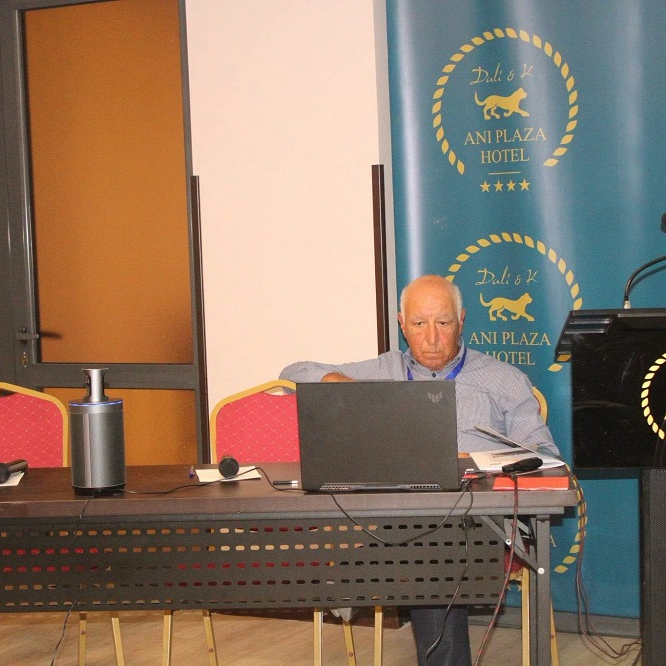
The three-day international obsidian conference IOC-2026, titled “From Magma to Artifact: The Geology and Archaeology of Obsidian,” has commenced.
On September 28, the three-day international obsidian conference IOC-2026, entitled “From Magma to Artefact: The Geology and Archaeology of Obsidian,” commenced in Yerevan. It was organized in Armenia jointly with the international IOC Scientific Committee by the Institute of Geological Sciences and the Institute of Archaeology and Ethnography. On the first day, the scholars who had arrived in Yerevan from different countries were welcomed by Arsen Bobokhyan, Director of the Institute of Archaeology and Ethnography, and Khachatur Meliksetyan, Director of the Institute of Geological Sciences. Before the beginning of the first session, the participants visited the Geological Museum of the Institute of Geological Sciences. The first session was chaired by Ruben Badalyan, archaeologist and researcher at the Institute of Archaeology and Ethnography, who also presented a paper entitled “The Use of Obsidian in the South Caucasus (Armenia): History and Results of Provenance Studies.” Khachatur Meliksetyan presented a paper entitled “The Geochemical Composition of Obsidian in the Armenian Highland.” Researchers from abroad also delivered presentations dedicated to Voskeblur, a Kura-Araxes culture settlement located within the administrative territory of the village of Hayanist, Ararat Province, Republic of Armenia. During the two days of the conference, approximately 40 archaeologists and geologists from different countries—including Hungary, the United States, Armenia, the Russian Federation, Cyprus, Georgia, Australia, Japan, France, and others—presented their research. On the third day of the conference, excursions are planned to various locations in the Republic of Armenia where obsidian sources are present.
2026-10-01
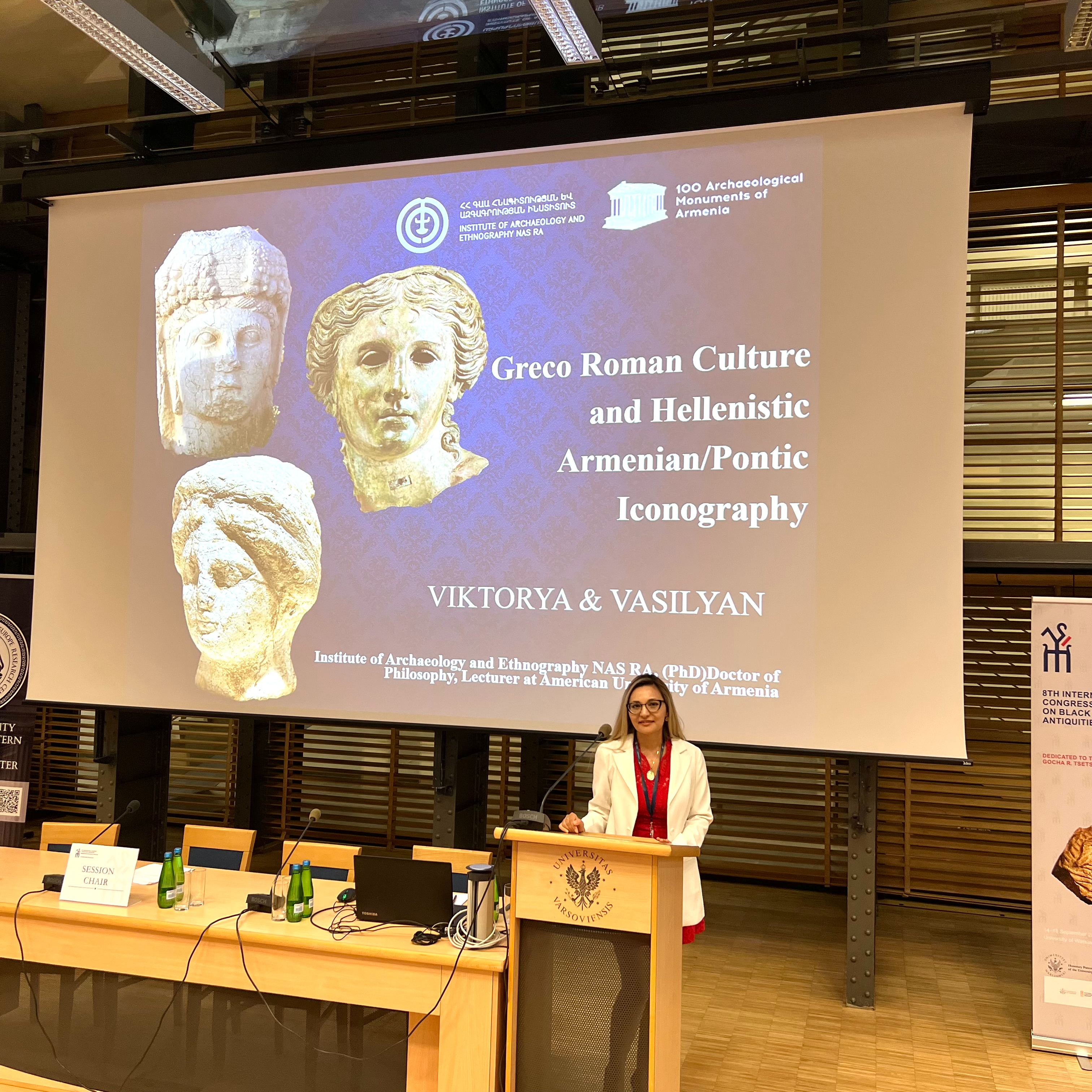
Victoria Vasilian Participated in the 8th International Congress of Black Sea Antiquities
From September 14 to 18, 2026, the University of Warsaw hosted the 8th International Congress on Black Sea Antiquities, one of the most important international scholarly events dedicated to the archaeology and history of the Black Sea region. This year’s congress was dedicated to the memory of the distinguished scholar and one of the initiators of this congress series, Gocha R. Tsetskhladze. The congress brought together more than 100 researchers from over 20 leading academic institutions in Europe and other parts of the world. The sessions focused on the theme “Common Trends and Local Traditions in the Black Sea Region (7th century BC – 5th/6th centuries AD).” Victorya Vasilyan, Senior Researcher at the Institute of Archaeology and Ethnography, PhD, participated in the congress with a presentation entitled “The Influence of Greco-Roman Culture on Armenian-Pontic Iconography.” The event also included a number of museum excursions and the participation of researchers from newly involved countries. Further details can be found at the link below.
2026-09-22
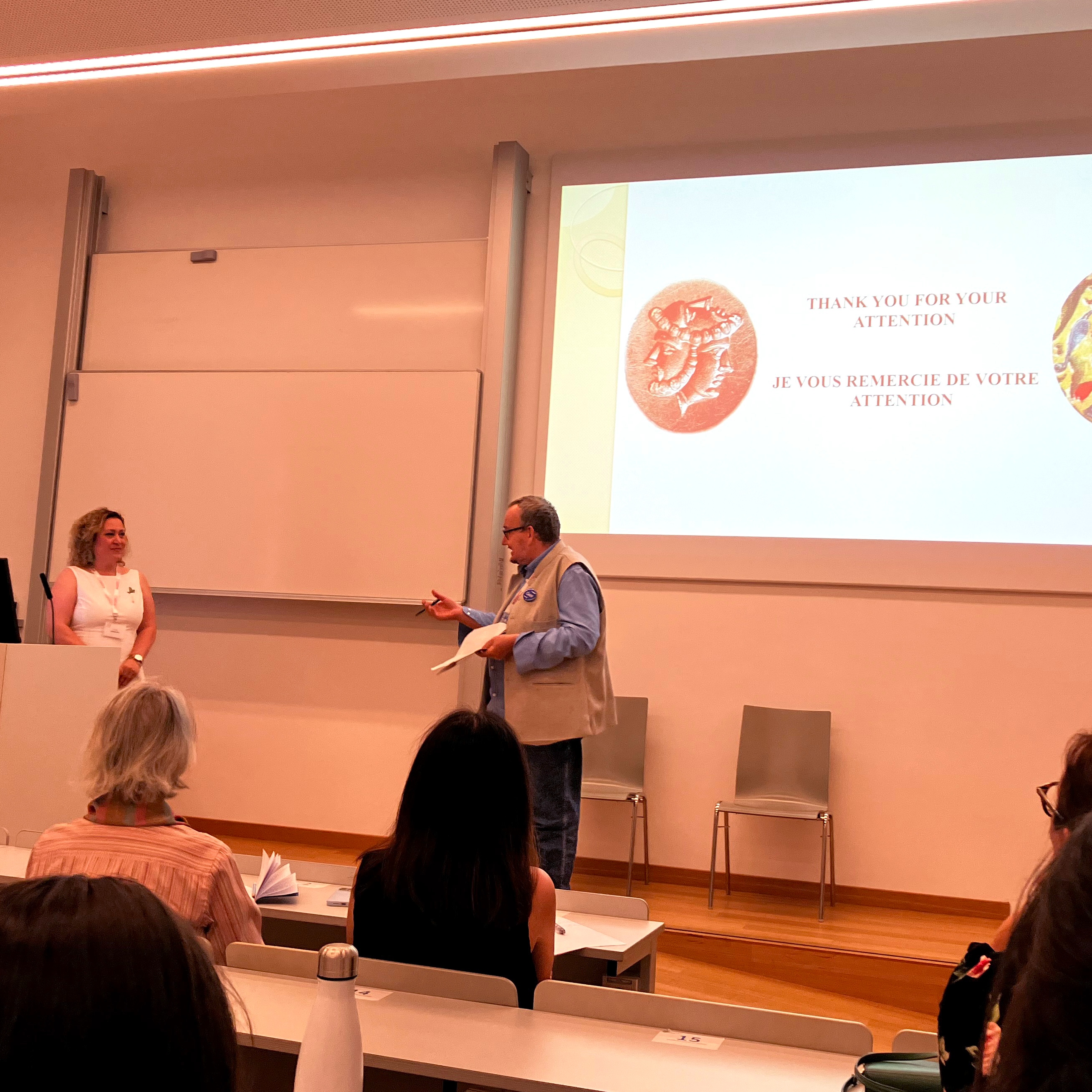
Within the framework of the 25th International Congress of Byzantine Studies, held at the University of Vienna, Armine Gabrielyan delivered a presentation.
The 25th International Congress of Byzantine Studies, entitled “Byzantium beyond Byzantium,” is being held at the University of Vienna from August 24 to 29. One of the largest international scholarly conferences in the field of Byzantine studies, the Congress is bringing together approximately 1,500 scholars from around the world this year. The participation of scholars from Armenia, as well as international specialists working in the field of Armenian studies, is particularly notable. On August 25, Armine Gabrielyan, Senior Researcher at the Institute of Archaeology and Ethnography of the National Academy of Sciences of the Republic of Armenia, presented a paper entitled “Echoes of Classical Antiquity: The Reminiscences of the Carved Gems in the Iconographic Program of Cilician Armenian Miniatures.” The paper explored the possible connections between the iconography of ancient engraved gems and Cilician Armenian manuscript illumination. Based on structural and compositional correspondences between a number of iconographic motifs, the paper examined the mechanisms through which ancient iconographic traditions may have been transmitted, as well as the possibility that, in certain cases, engraved gems may have served as direct iconographic models for medieval Armenian illuminators. The paper was presented in a session chaired by Johannes Preiser-Kapeller, a renowned specialist in Byzantine history. Armine Gabrielyan’s participation in the Congress was made possible through the financial support of the H. Hovnanian Family Foundation Armenia.
2026-08-29
