Events
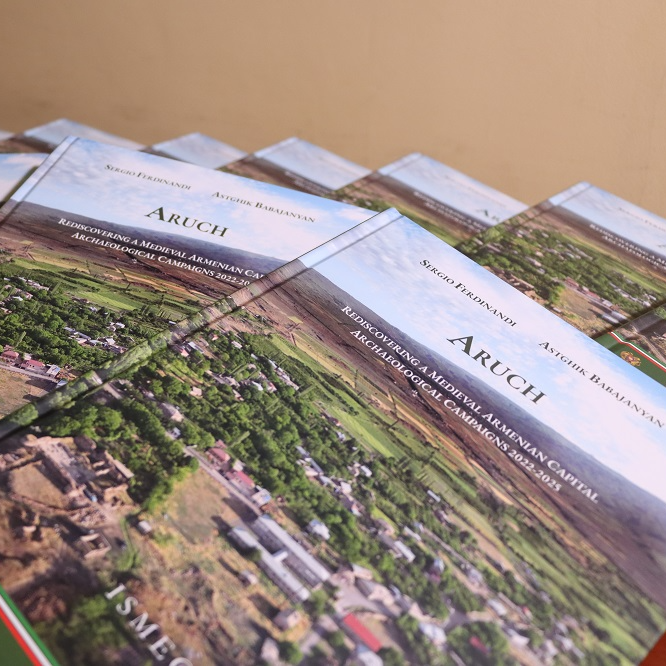
The presentation of the volume "Aruch. Rediscovering a Medieval Armenian Capital (Archaeological Campaigns 2022–2025)".
On June 1, the Round Hall of the Presidium of the National Academy of Sciences of the Republic of Armenia hosted the presentation of the volume "Aruch. Rediscovering a Medieval Armenian Capital (Archaeological Campaigns 2022–2025)". Archaeological excavations at the fortress of Aruch village were conducted by the Armenian–Italian archaeological mission, and the results of these investigations have now been published in this important scholarly work. Among those attending the event were Alessandro Ferranti, Ambassador Extraordinary and Plenipotentiary of the Italian Republic to Armenia; Academician Yuri Suvaryan; Pavel Avetisyan, Vice-President of the National Academy of Sciences of the Republic of Armenia; Valerio Rossi, President of ISMEO; Arsen Bobokhyan, Director of the Institute of Archaeology and Ethnography of the NAS RA; as well as archaeologists, historians, members of the expedition, and invited guests. The opening remarks were delivered by Arsen Bobokhyan, Director of the Institute of Archaeology and Ethnography, who emphasized the significance of the research and excavations carried out by the Armenian–Italian archaeological mission, as well as the publication of the volume summarizing their results. Greetings were also delivered by Alessandro Ferranti, Ambassador Extraordinary and Plenipotentiary of the Italian Republic to Armenia. Pavel Avetisyan, Vice-President of the NAS RA, highly praised both the scholarly importance of the publication and the Armenian–Italian cooperation in the field of archaeology. He also noted that Italian archaeologists are currently collaborating with their Armenian colleagues on archaeological investigations at Dvin under the direction of archaeologist Hamlet Petrosyan, as well as at other archaeological sites. Valerio Rossi, President of ISMEO, likewise highlighted the importance of the Armenian–Italian archaeological mission and the value of the newly published volume. The book was presented by its co-authors: Astghik Babajanyan, Scientific Secretary of the Institute of Archaeology and Ethnography of the NAS RA and Co-Director of the Aruch Archaeological Mission, and Sergio Ferdinandi, Vice-President of ISMEO, Co-Director of the Aruch Archaeological Mission, and Coordinator of the Aruch Project of the Italian Agency for Development Cooperation (AICS). The new scholarly volume dedicated to the medieval historical and cultural heritage of Aruch presents the results of four years of Armenian–Italian archaeological collaboration and offers a comprehensive reassessment of the site as an important political, cultural, and economic centre of medieval Armenia. The study focuses on the medieval fortress, examining it within the broader built and cultural landscape of Aruch. The authors reconstruct its architectural layout, functional spaces, and the long sequences of occupation, reuse, and transformation extending from the medieval period into the Early Modern era. The research demonstrates that Aruch, combining the functions of both religious and secular centres of authority and possessing a developed system of fortifications and infrastructure, was not merely a settlement or a stop along communication routes, but a vibrant and multifunctional centre of medieval life. The second part of the volume is devoted to the role of cultural heritage as a key driver of sustainable rural development. It presents the ongoing programmes for the conservation, restoration, and promotion of Aruch, aiming to integrate archaeological research into broader processes of heritage management and the development of an eco-archaeological park.
2026-06-01
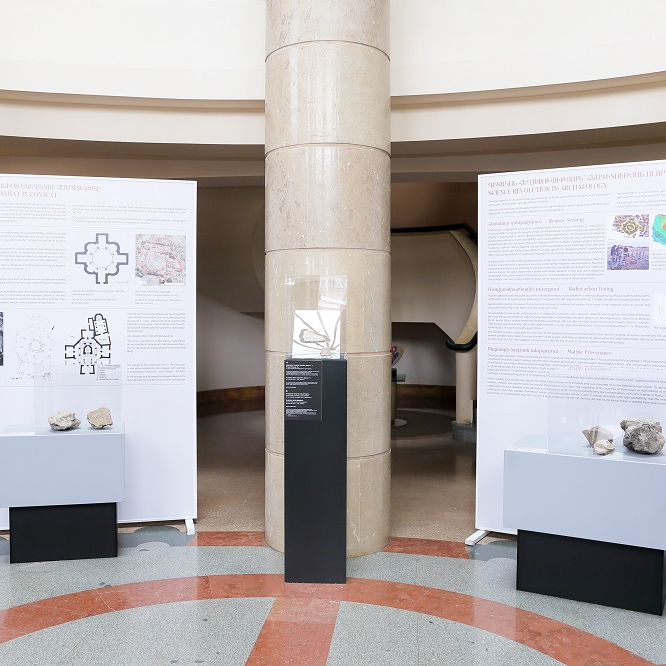
A temporary exhibition entitled “Aruch: Rediscovering A Medieval Armenian Capital Archeological Campaigns 2022-2025 ” opened.
On May 29, a temporary exhibition entitled “Aruch: Rediscovering A Medieval Armenian Capital Archeological Campaigns 2022-2025 ” opened at the Mesrop Mashtots Matenadaran, organized through the collaboration of the Institute of Archaeology and Ethnography of the National Academy of Sciences of Armenia and the Institute of Classical and Early Christian Archaeology of the University of Münster. Welcoming remarks were delivered by Zhanna Andreasyan, Minister of Education, Science, Culture and Sport of the Republic of Armenia; Arsen Bobokhyan, Director of the Institute of Archaeology and Ethnography of the NAS RA; Ara Khzmalyan, Director of the Matenadaran; and Claudia Busch, Ambassador Extraordinary and Plenipotentiary of the Federal Republic of Germany to Armenia. The exhibition presents exceptional finds discovered during the excavations at Artashat, the architectural features of the structure, the process of its scientific reconstruction, as well as the results obtained through the application of the latest research methods.
2026-05-29
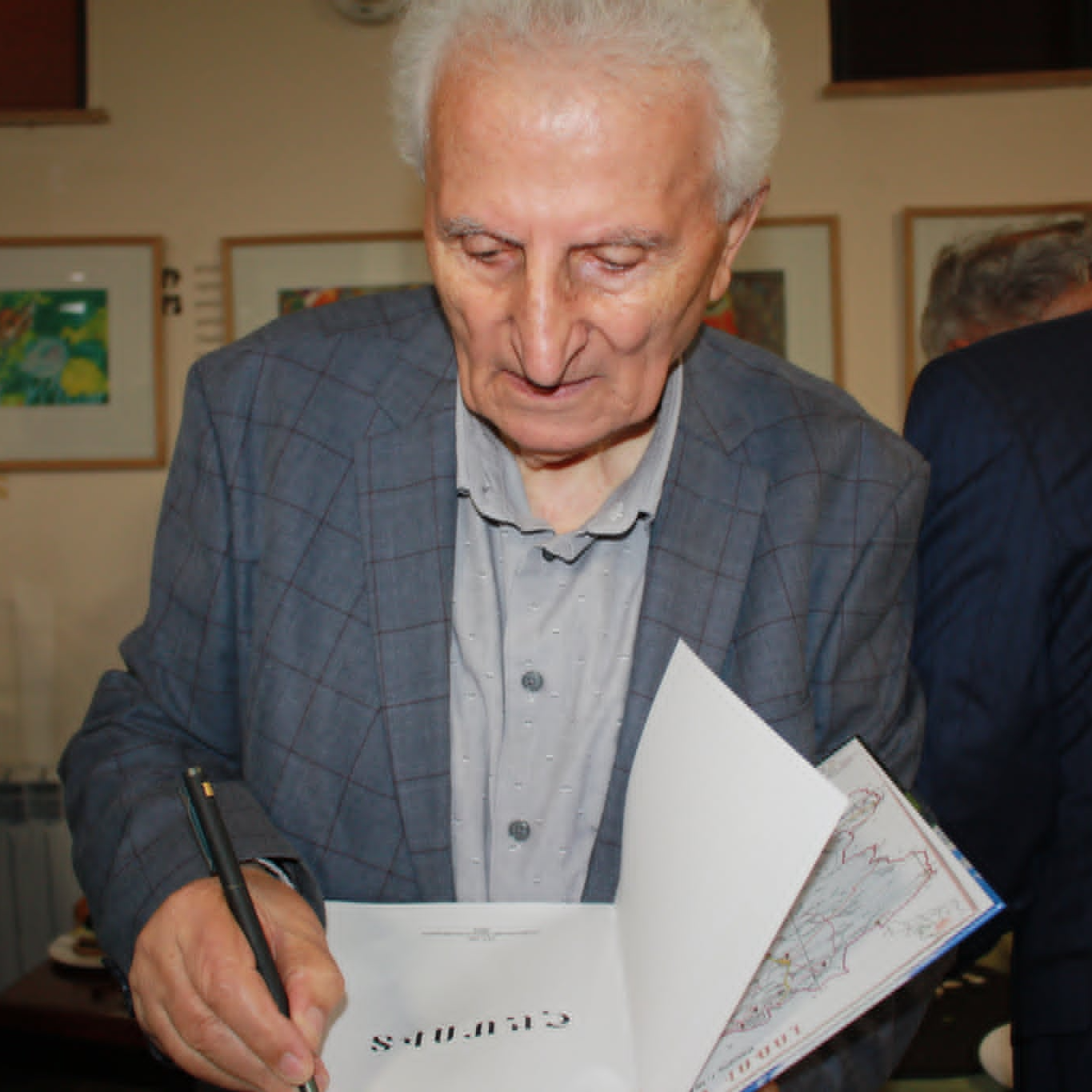
Book presentation: "Shamut: A Brief Historical-Geographical Overview: Ethnography, Folklore, Dialect"
On May 22, the presentation of the book "Shamut: A Brief Historical-Geographical Overview: Ethnography, Folklore, Dialect" by Dr. Armen Sh. Sargsyan, Doctor of Biological Sciences and researcher at the Institute of Archaeology and Ethnography of the NAS RA, took place at the Hrant Matevosyan Cultural Center-Museum. The event was attended by representatives of various cultural spheres, natives of Shamut, relatives of Armen Sh. Sargsyan, employees of the Institute of Archaeology and Ethnography, and other guests. The attendees were welcomed by Davit Matevosyan, Director of the Hrant Matevosyan Cultural Center-Museum, who emphasized the value and significance of Armen Sh. Sargsyan’s work. A speech of appreciation regarding the book was delivered by Dr. Hakob Cholakyan, Doctor of Historical Sciences and researcher at the Institute of Archaeology and Ethnography. The author spoke about the history of the book’s creation, the results of nearly half a century of work, and the course of the research, expressing gratitude to all those who supported him. The importance of the book was also emphasized and highly praised by the other speakers. The attendees had the opportunity to ask questions to the author and discuss various topics addressed in the work. The book "Shamut" is dedicated to the village of Shamut in the Lori Province of the historical Gugark region and to its 163-year history. It is intended not only for the people of Shamut, but also for folklorists, ethnographers, linguists, cultural scholars, and other specialists. The book is dedicated to those natives of Shamut who have passed away but remain immortalized in the memory of generations through their good deeds. As an epigraph, the author chose the words of Hrant Matevosyan: “Man and beast are distinguished from one another by memory. Memory stands between man and beast. If you exist in memory, then you burn, you are human, you carry burdens, you are restless. If you do not exist in memory — there, in the open field, the cow grazes without memories, while the calf was slaughtered only yesterday.” At the end of the presentation, the author presented signed copies of the book to the attendees.
2026-05-23
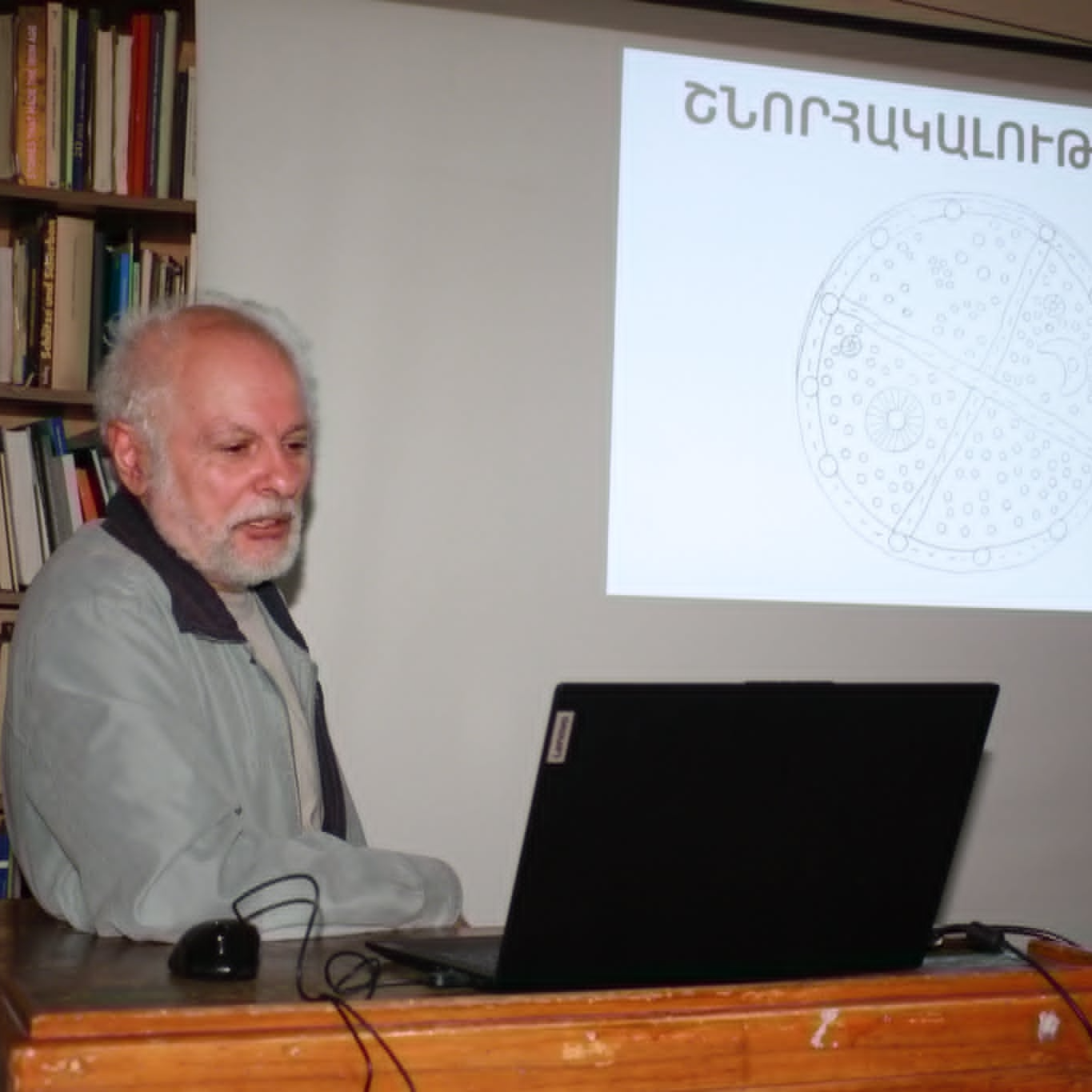
Lecture: “Concepts of Space and Time in the Rock Art of Armenia”
On May 21, a lecture entitled “Concepts of Space and Time in the Rock Art of Armenia” was held in the reading hall of the Institute of Archaeology and Ethnography of the NAS RA within the framework of the “Folkloristic Discussions” series. The event was dedicated to the recently published monograph “The Rock Art of Armenia” by Karen Tokhatyan, PhD, and was organized by the Department of Folk Studies of the Institute, featuring a presentation by the author himself. The event was attended by staff members from various departments of the Institute of Archaeology and Ethnography, as well as individuals interested in the topic. The speaker was introduced by Tork Dalalyan, Deputy Director of the Institute of Archaeology and Ethnography, who emphasized the significance of the publication devoted to the rock art of Armenia and highlighted the author’s important and long-term scholarly work. K. Tokhatyan presented excerpts from the monograph and discussed rock art found both in Armenia and in various parts of the world, many examples of which date back millennia. During and after the lecture, attendees addressed questions to the speaker, followed by a discussion.
2026-05-21
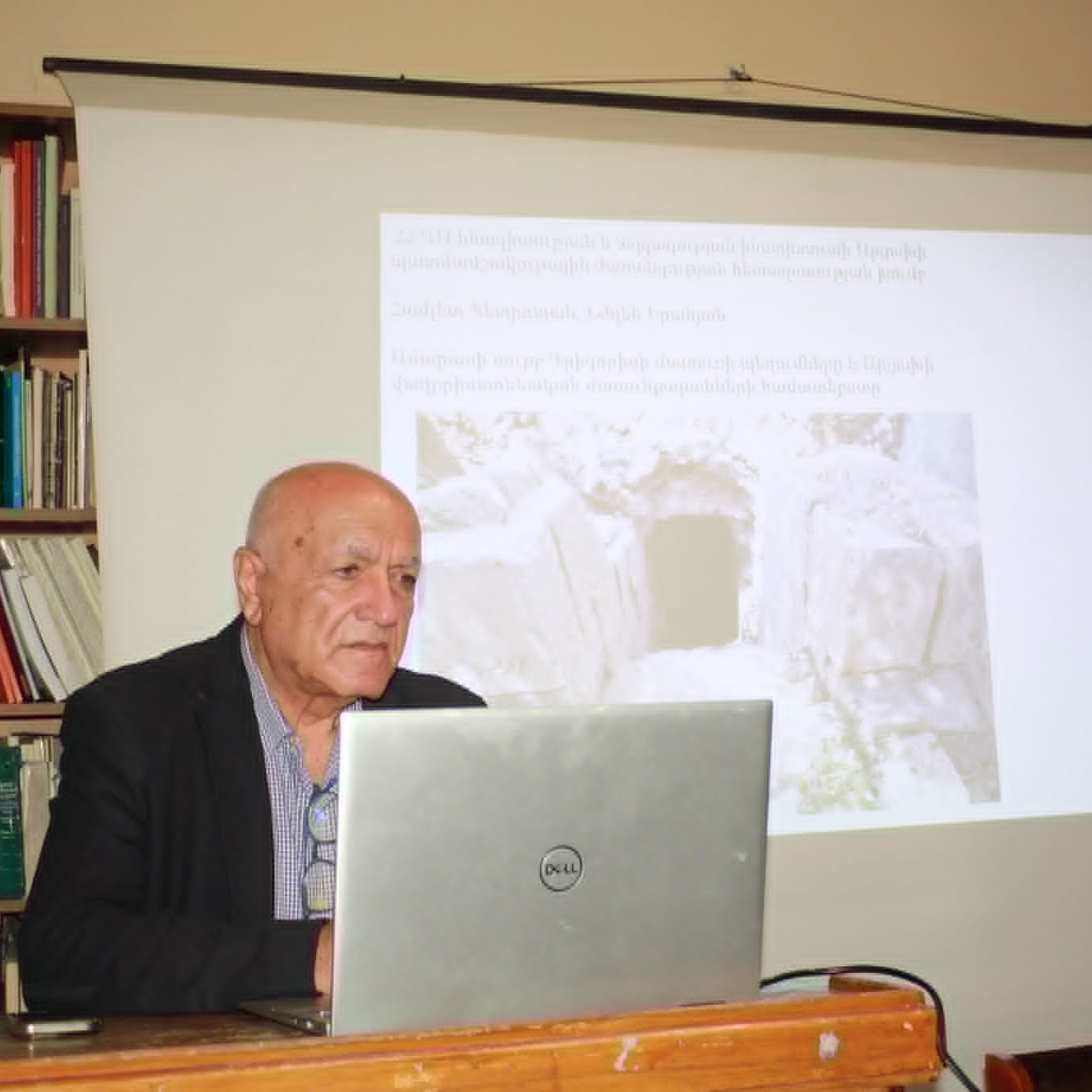
Lecture: “The Excavations of the St. Grigoris Chapel of Amaras and the Context of Early Christian Reliquaries in Artsakh.”
On May 18, the regular seminar of the Research Group for the Historical and Cultural Heritage of Artsakh was held in the reading hall of the Institute of Archaeology and Ethnography of the NAS RA. Prof. Hamlet Petrosyan, Doctor of Historical Sciences, delivered a lecture entitled “The Excavations of the St. Grigoris Chapel of Amaras and the Context of Early Christian Reliquaries in Artsakh.” The excavations of the St. Grigoris Chapel of Amaras, located in the Martuni region of the Republic of Artsakh, were carried out in the eastern courtyard of the present-day church, within a separate 6×5 m excavation area adjoining the exterior side of the eastern wall. The principal aim was to verify the hypothesis according to which the current church, by means of its eastern wall, had cut through and divided the chapel into two parts, leaving its presumed eastern entrance outside the structure. The speaker noted that the excavations revealed the remains of the eastern entrance constructed of finely hewn stones, including the open-air vestibule, the bases of the monumental entrance, a wall pilaster base, as well as the staircase descending into the semi-subterranean hall. The excavations also demonstrated that the original structure of Grigoris’s tomb possessed an eastern entrance, an exceptional phenomenon in Armenian ecclesiastical architecture. The speaker further noted that during the long-term excavations conducted at Tigranakert, a tomb with an eastern entrance was likewise uncovered within the area of the early Christian church discovered there. During the lecture, H. Petrosyan also addressed the activities of King Vachagan and a number of related issues. During and after the seminar, attendees addressed questions to the speaker, followed by a professional discussion.
2026-05-18
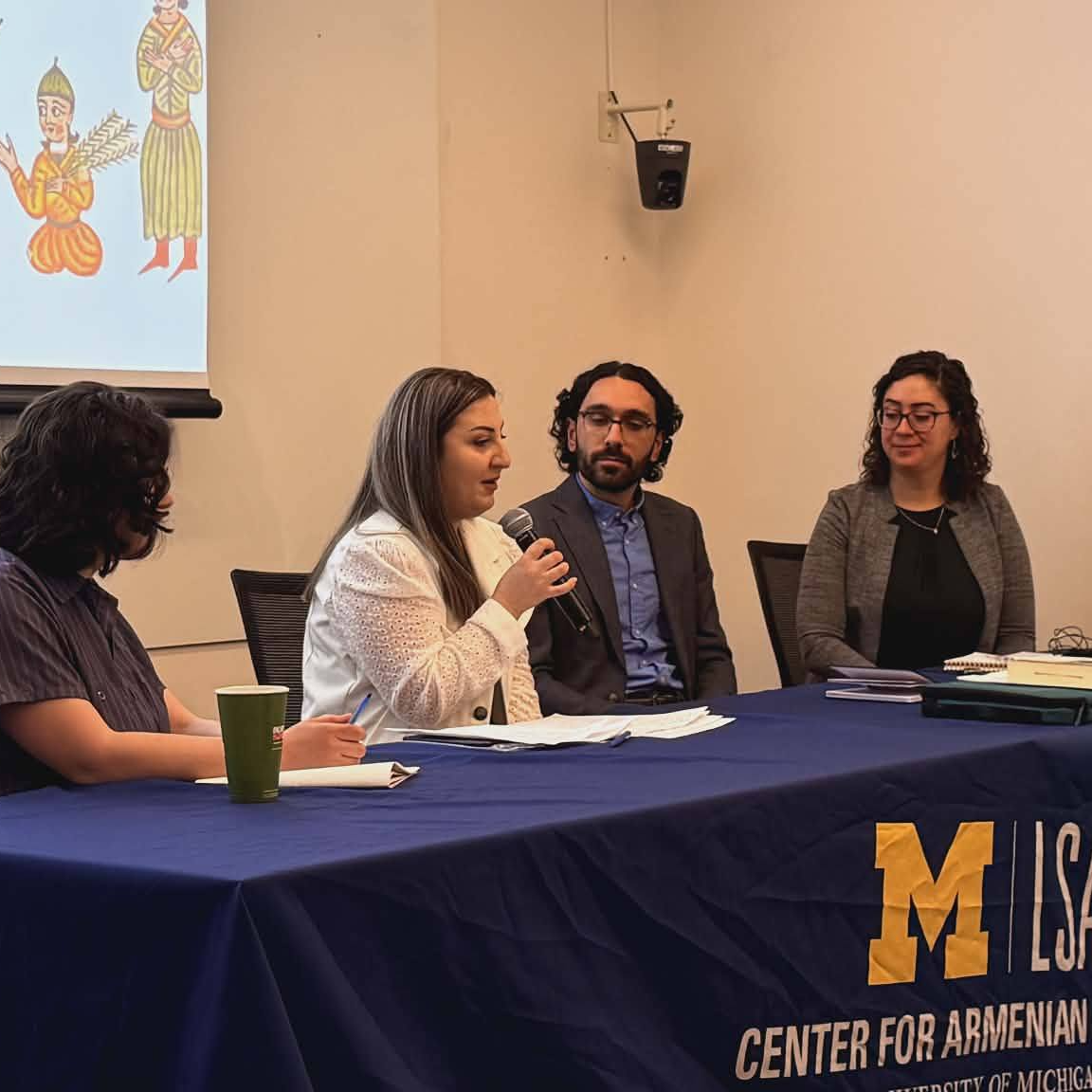
Lusine Tanajyan at the 15th Workshop of the Armenian Studies Program at the University of Michigan
On April 9–11 of this year, Lusine Tanajyan, PhD in History, Senior Researcher at the Department of Diaspora Studies, participated in the 15th International Workshop organized by the Center for Armenian Studies at the University of Michigan (Ann Arbor, USA). Within the framework of the workshop, Dr. Lusine Tanajyan delivered a presentation on issues of identity among Armenians in Greece. The event brought together leading scholars in Armenian and diaspora studies, as well as researchers from various countries, creating a productive environment for in-depth academic discussions and exchange of ideas.
2026-05-06
