Events
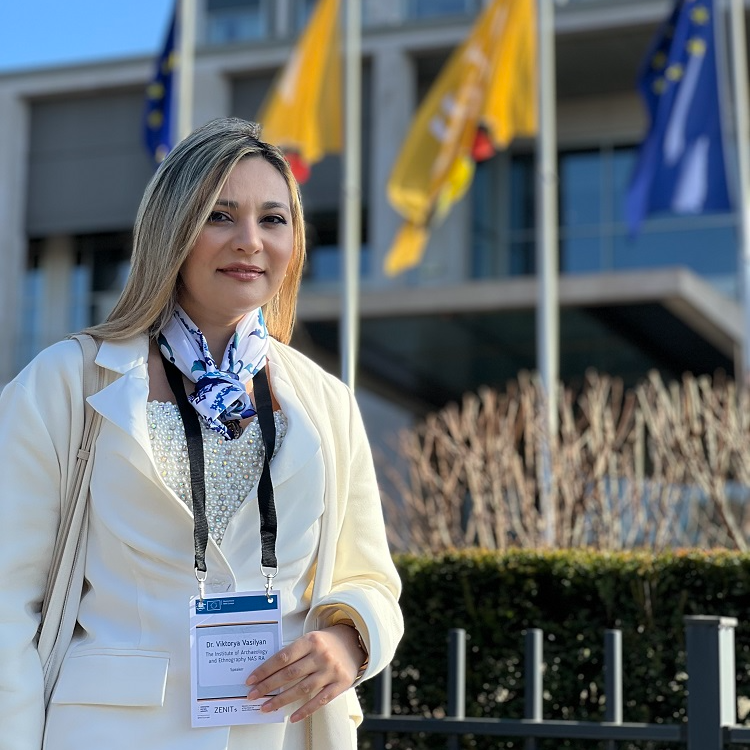
Senior Researcher of the Institute of Archaeology and Ethnography of the NAS RA Viktorya Vasilian at the European Conference on the Preparation of Horizon Europe Programmes
Senior Researcher at the Institute of Archaeology and Ethnography of the NAS RA, PhD in History Viktorya Vasilian, was invited on February 19–20 of this year to Düsseldorf, Germany, to participate in the “Preparation of Horizon Europe Programmes: Successful Research in Europe 2026 – 13th European Interdisciplinary” conference. The speaker presented the project selected by the jury entitled “Virtual Archaeology: Armenia at the Crossroads of Civilizations and Cultures.”
2026-02-23
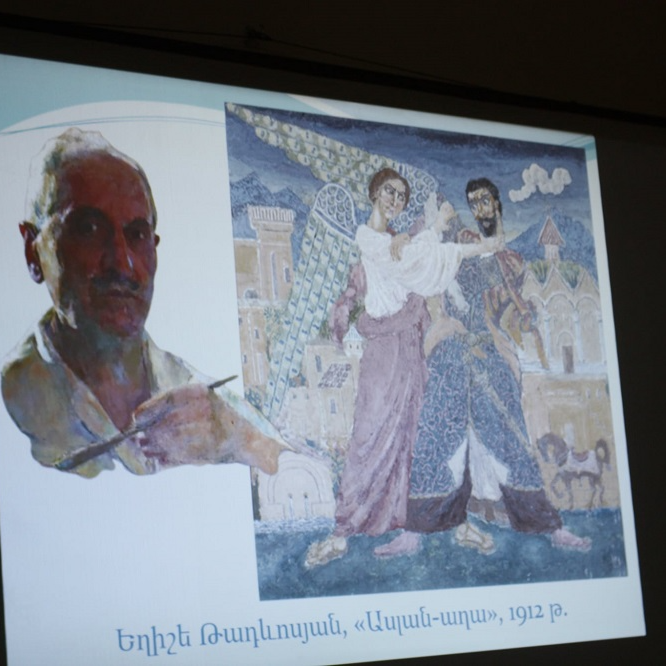
Lecture: “A Folkloristic Examination of the Epic of Aslan: Plot, Motifs, Variants, and Original Texts”
On 19 February 2026, in the reading hall of the Institute of Archaeology and Ethnography (IAE), a lecture entitled “A Folkloristic Examination of the Epic of Aslan: Plot, Motifs, Variants, and Original Texts” was held within the framework of the “Folkloristic Discussions” series. The lecture was delivered by Samvel Ramazyan, PhD, Associate Professor. The Deputy Director of the IAE Tork Dalalyan welcomed the attendees, emphasizing the relevance and scholarly value of the topic. The audience included staff members from various departments of the Institute, students, and other interested participants. The lecturer presented the plot, motifs, and variants of the Armenian folk epic “Aslan Agha,” addressing the image of the hero as an embodiment of the just ruler envisioned by the people. Discussing the history of the epic’s documentation, it was noted that various folklorists (H. Shahbazyan, G. Tarverdyan, Karapet Melik-Ohanjanyan, M. Abeghyan, and others) recorded different versions, mainly based on the narration of Manuk Bidza Harutyunyan, a 75-year-old native of the Mokk region. A sung version of the epic was transcribed in 1920 by Spiridon Melikyan. In 1937, G. Tarverdyan recorded another rendition under the title “Aslan Kaklan”, based on the account of Jendo Jibraelyan, a 68-year-old farmer from Jnuk village of Shatakh. The folk tale “The Faithful Wife” is also thematically related to the epic. The event concluded with a question-and-answer session and open discussion.
2026-02-19
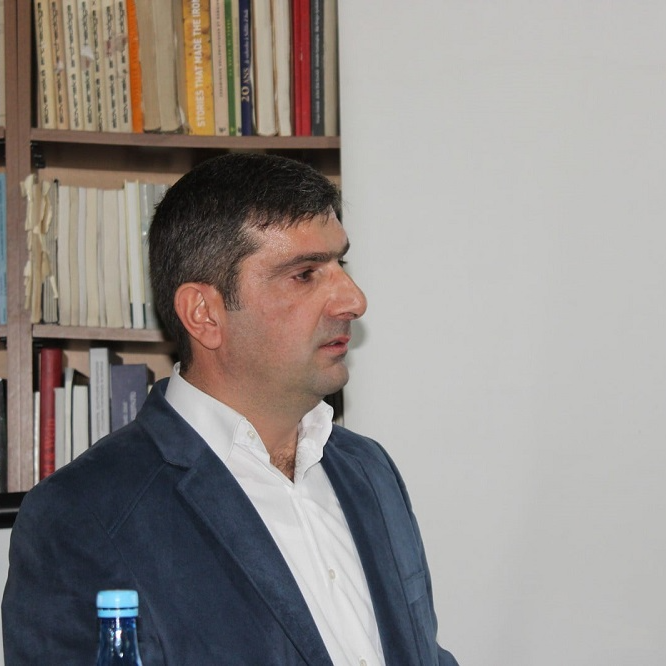
The defense of Tigran Aleksanyan’s dissertation took place at the Institute of Archaeology and Ethnography
On February 12, the first PhD dissertation defense of 2026 was held in the reading hall of the Institute of Archaeology and Ethnography of the NAS RA (IAE). At the session of Specialized Council 007 “Archaeology and Ethnography,” operating under the Higher Attestation Commission (HAC) at the Institute of Archaeology and Ethnography of the National Academy of Sciences of the Republic of Armenia, Tigran A. Alexanyan presented his dissertation entitled “The Medieval Fortification of Berd Region.” The session was attended by the Director of the Institute, of Historical Sciences, Arsen Bobokhyan, staff members of various departments, archaeologists, historians, students, and other guests. The meeting was chaired by the head of the Specialized Council, Corresponding Member of the NAS RA, Doctor of Historical Sciences, Pavel Avetisyan. The academic secretary of the Council was Arsen Harutyunyan, PhD. The dissertation was supervised by Dianna Mirijanyan, PhD. The official opponents were Doctor of Historical Sciences, Professor Hamlet Petrosyan, and Armine Zohrabyan, PhD. The leading organization was Yerevan State University. The dissertation focuses on the study of medieval fortification structures and defense systems of the Berd region (formerly Shamshadin, later Tavush region, and currently the enlarged community of Berd), located in the northeastern part of the Republic of Armenia. During the presentation, Tigran Alexanyan outlined the general scope, aims, and objectives of the research, noting that it represents the first attempt to systematically study and present the medieval fortification monuments of the region, the available scholarly data, and previous research perspectives. The dissertation addresses the principles of construction of these monuments, their building phases, chronology, and historical development. It also introduces into scholarly circulation photographs, scale drawings, measurements, and a substantial corpus of archaeological materials uncovered during excavations. Speeches were delivered by Pavel Avetisyan, Arsen Harutyunyan, Dianna Mirijanyan, the official opponents, and other scholars present. As a result of a secret ballot, all 9 members of the Specialized Council voted in favor of the dissertation, and Tigran Alexanyan was awarded the PhD degree.
2026-02-12
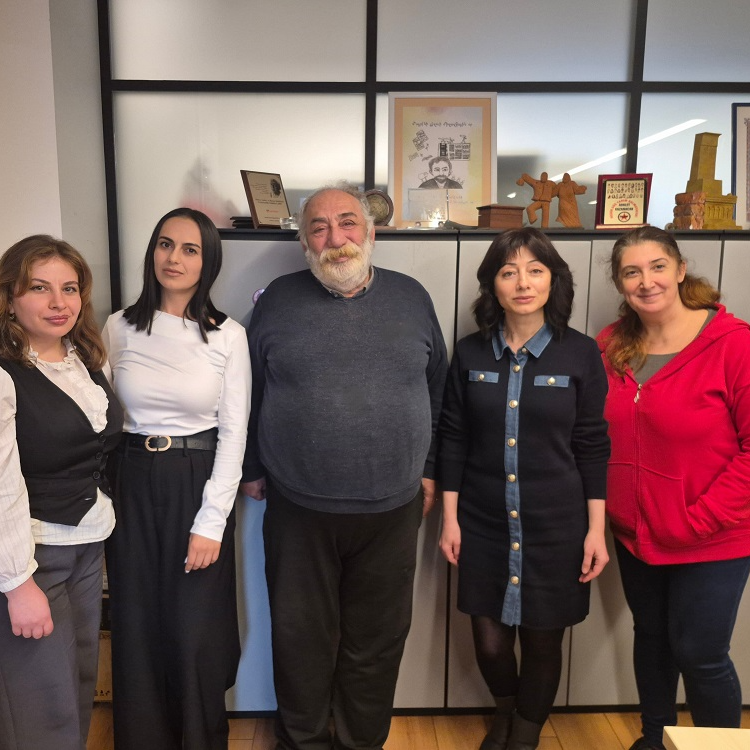
The researchers of the Department of Diaspora Studies visited Istanbul to conduct field research
On January 21–24, 2025, the researchers of the Department of Diaspora Studies of the Institute of Archaeology and Ethnography NAS RA Salvine Markosyan, Mariam Harutyunyan, Nelly Khachaturyan visited Istanbul to conduct field research. During the visit, meetings were held with the editorial team of Agos newspaper, Aras Publishing House and the Yesayan Association, and preliminary data were collected. This visit will serve as a foundation for further research within the framework of Salvine Markosyan’s dissertation, “Community Life of Istanbul Armenians Through the Newspapers Agos, Jamanak, and Nor Marmara.” The visit was carried out with the support of the Gulbenkian Foundation.
2026-01-30
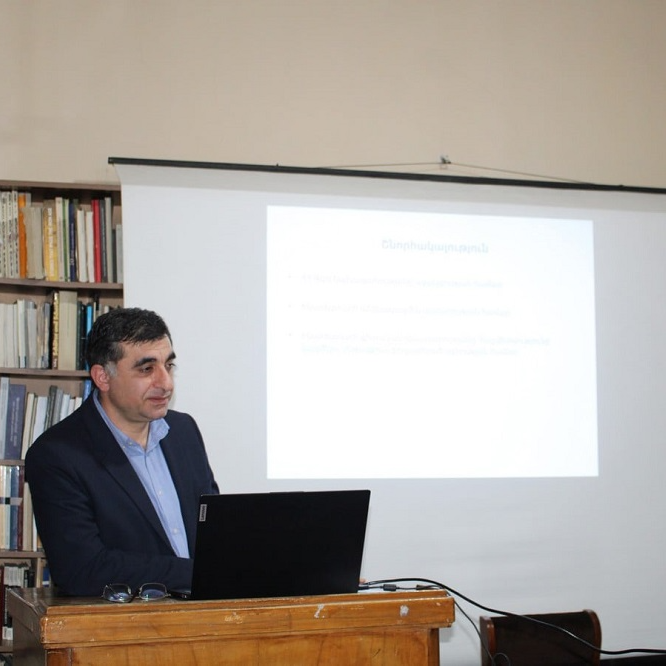
The 2025 Annual Report Meeting Was Held at the Institute of Archaeology and Ethnography
On 12 December, the annual meeting for 2025 was held in the reading hall of the Institute of Archaeology and Ethnography (IAE) of the National Academy of Sciences of the Republic of Armenia, during which the year’s outcomes were summarized and the main results of the Institute’s activities were presented. The Director of the Institute of Archaeology and Ethnography, Doctor of Historical Sciences Arsen Bobokhyan, delivered a report on the Institute’s scientific, educational, and organizational work carried out in 2025. At the conclusion of the meeting, addresses were delivered by Doctor of Economic Sciences, Academician, Corresponding Member of the National Academy of Sciences of the Republic of Armenia Yuri Suvaryan, and Doctor of Historical Sciences, Professor, Corresponding Member of the National Academy of Sciences of the Republic of Armenia, Scientific Director of the IAE Pavel Avetisyan, who highly commended the activities of the Institute of Archaeology and Ethnography, its achieved results, and its development trends. The attendees also posed questions to A. Bobokhyan regarding implemented programs, existing challenges, and future strategic priorities.
2025-12-12
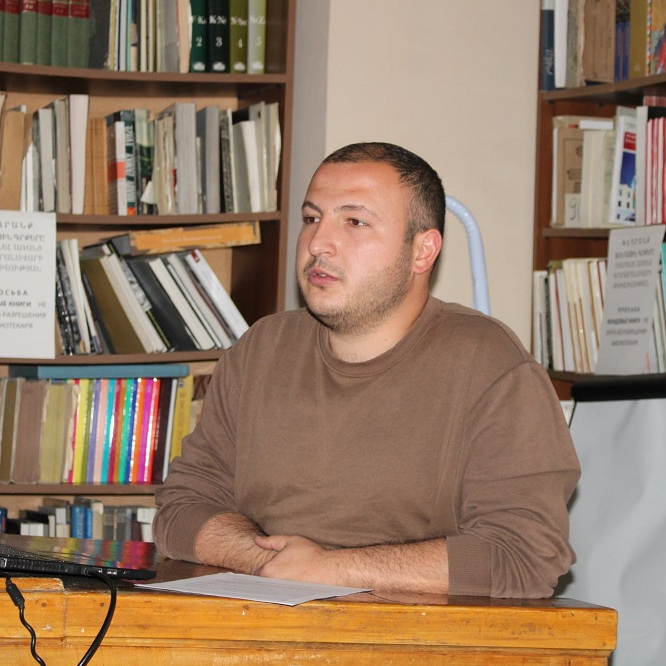
Lecture: “Issues of the Continuous Monitoring of Monuments: The Case of the Cultural Heritage of Artsakh.
On December 1, a seminar of the Research Group of the Historical and Cultural Heritage of Artsakh was held in the reading hall of the Institute of Archaeology and Ethnography of the NAS RA. Group member Hamazasp Abrahamyan delivered a lecture titled “Issues of the Continuous Monitoring of Monuments: The Case of the Cultural Heritage of Artsakh.” The seminar was attended by members of the group, headed by the group leader, Doctor of Historical Sciences and Professor Hamlet Petrosyan, as well as other participants interested in the topic. At the conclusion of the seminar, a discussion took place during which the attendees posed questions to the speaker.
2025-12-02
